MLB Lockout Explained: Salary Cap Fight and What Fans Can Expect
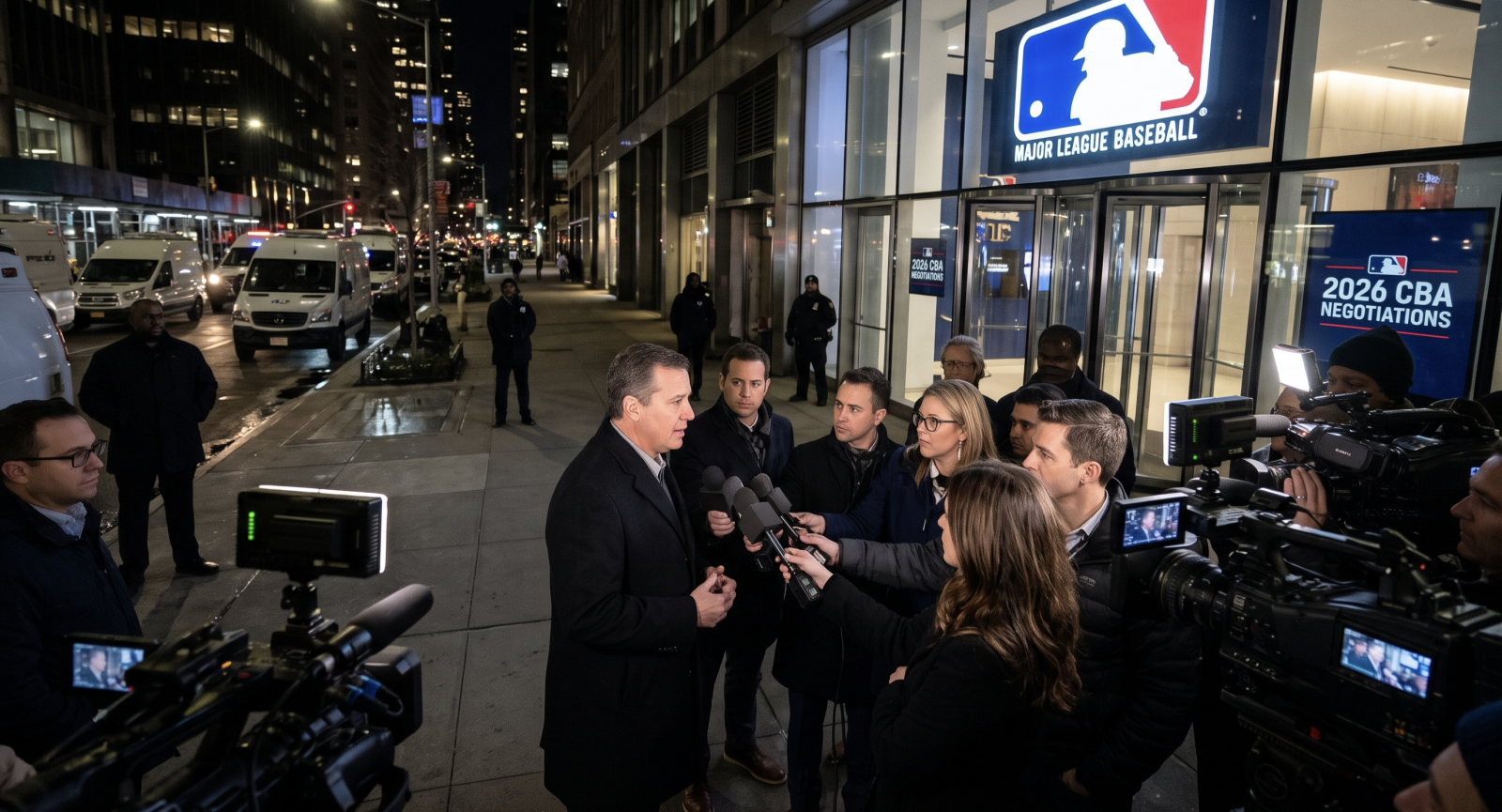
Major League Baseball's labor contract expires at 11:59 p.m. Eastern on 1 December 2026, and a lockout of the players is widely expected because owners and the players' union are far apart on one issue: a salary cap. Owners want a cap and a spending floor, which baseball has never had. The union says it will not accept either. If a lockout happens, trades and free-agent signings for major leaguers would stop, but the minor league season is expected to go on.
Last updated: 11 November 2026. This is a fast-moving story. Proposals, deadlines and statements can change quickly.
Key Takeaways
- The current collective bargaining agreement (CBA) ends on 1 December. Owners are expected to lock out players when it does.
- On 3 November, MLB proposed a salary cap of $258.2 million and a floor of $180.2 million, starting in 2028 rather than 2027.
- The players' union rejects any cap and has proposed more revenue sharing between big-market and small-market teams.
- The last lockout lasted 99 days, from December 2021 to March 2022, and pushed back Opening Day by a week.
- During a lockout, players on 40-man rosters cannot be traded or signed, and the Winter Meetings would not take place in the usual way.
What Is a Lockout, and Why Is One Likely?
A lockout is an action by owners, not players. When a labor contract runs out and no new deal exists, owners can shut the doors to players covered by the old agreement. A strike is the opposite: players refuse to work.
Baseball has no salary cap. Teams can spend as much as they like, though high spenders pay a tax, called the competitive balance tax, above a set payroll level. The league argues that this leaves small-market teams unable to compete. The union argues that a cap would simply limit what players can earn. With both sides saying they will not move on that point, a lockout looks more likely than a quick agreement.
What Each Side Is Asking For
| Issue | MLB (owners) | Players' union (MLBPA) |
|---|---|---|
| Salary cap and floor | $258.2M cap, $180.2M floor, starting 2028 | Rejects any cap or floor |
| Balance between teams | Says a cap improves competitive balance | Proposes a revised revenue-sharing system that moves more money from big-market to small-market teams |
| 2027 season | Current tax and revenue-sharing rules stay in 2027 | Says a delayed cap still has the same effects |
| Player benefits offered | $1 million minimum salary (for players with 2+ years of service; $900,000 for others), earlier free agency, a 30% bigger pre-arbitration bonus pool | Says these are tied to the cap and do not offset it |
The league's number has moved. Its earlier offer, made in June, was a $245.3 million cap and a $171.2 million floor. Our arithmetic shows the new proposal raises the cap by about $12.9 million and the floor by $9.0 million.
The Strongest Arguments on Each Side
Owners' case. The league says a cap and floor would help competitive balance and give every team a reason to spend. A league spokesman said the delayed start would give clubs a full offseason to prepare. One report using FanGraphs figures found four teams already above the proposed $258.2 million cap for 2027 and 20 teams below the $180.2 million floor, which supporters say shows how uneven payrolls are.
Players' case. The union says the plan would cause a large cut in player pay and remove basic protections such as guaranteed contracts. It argues that revenue sharing, not a cap, is the right way to help small markets. Critics of a cap also note that small-market Milwaukee won this year's World Series under the current system, which they see as evidence it can work. Owners reply that one title does not change the long-run spending gap.
Both views are sincere, and the data cuts in different directions. Readers should treat claims about what a cap "would do" as arguments, not settled facts.
What a Lockout Would Change
- Transactions freeze: No trades, and no signings of major-league free agents, for as long as it lasts.
- 40-man rosters locked out: Those players cannot use team facilities, and they are kept out of minor league camps and games.
- No Winter Meetings: The usual hub of offseason deals would not run in its normal form. The MLB phase of the Rule 5 Draft is also likely to be postponed.
- Minor leagues continue: Players who are not on a 40-man roster or a major-league contract are unaffected, as they were in 2021 and 2022.
Expect a rush before the deadline. Teams and agents are in Las Vegas for the general managers' meetings, and a burst of signings before a lockout is what happened last time, so deals announced in the next three weeks should be seen in that light.
The Last Lockout, for Comparison
| Detail | 2021–22 lockout |
|---|---|
| Dates | 2 December 2021 to 10 March 2022 |
| Length | 99 days |
| Opening Day | Moved from 31 March to 7 April |
| Season length | Games postponed, then made up, so a full 162-game season was kept |
That lockout ended in time to protect the regular season, but this one involves a harder issue. A cap is a bigger change than the smaller economic terms argued over in 2021, which is why some analysts think a longer stoppage is possible. How long it lasts is anyone's guess.
What to Watch Next
- 1 December, 11:59 p.m. ET: whether the contract expires without a deal, and whether owners start the lockout.
- Pre-deadline signings: big contracts and trades completed before the freeze.
- Any new proposal: a change on the cap, its start date or the revenue-sharing plan.
- Spring training: the key test of how long talks can run before games are at risk.
- Mediation: a federal mediator was brought in during the last lockout in early February.
The Factora Take
This is a fight about who controls baseball's money, not just about a number. A cap would change how teams are built for years, which is why neither side wants to give ground before the contract ends. For fans, the practical guidance is patience: a quiet winter does not mean the season is lost, since the last lockout still produced a full schedule. Watch for movement on the cap itself, because side benefits like a higher minimum salary are unlikely to settle the dispute on their own.
Frequently Asked Questions
When does the MLB contract expire?
The current CBA expires at 11:59 p.m. Eastern on 1 December 2026.
What is the difference between a lockout and a strike?
A lockout is started by owners, who keep players out. A strike is started by players, who refuse to play.
Will the 2027 season be canceled?
No cancellation has been announced. The last lockout lasted 99 days and still allowed a full 162-game season, but a longer dispute this time could affect spring training and Opening Day.
Do minor league games stop during a lockout?
No. Players who are not on a 40-man roster or a major-league contract are not covered, and the minor league season is expected to go ahead.
What exactly does the league want?
A salary cap of $258.2 million and a floor of $180.2 million, starting in 2028, plus some player benefits. The union has rejected the cap.
Related articles