
US-Israel-Iran Conflict Escalates: Naval Strike in Gulf of Oman and Tehran Lifts Ballistic Missile Limits
The protracted military standoff involving the United States, Israel, and Iran has entered an unpredictable operational phase as diplomatic backchannels paused following the conclusion of the U.S. congressional midterm elections. With regional mediators suspending shuttle diplomacy, the conflict theater has seen immediate escalations across two critical vectors: Washington’s enforcement of an expanded maritime blockade in the Gulf of Oman and Tehran’s formal declaration lifting self-imposed restrictions on ballistic missile ranges.
While President Donald Trump signaled on Sunday that further American kinetic strikes remain "highly unlikely" as long as potential negotiations advance, Israeli defense leadership declared that military objectives against Iranian strategic capabilities remain "not complete," underscoring divergent timelines among allied capitals.
The Post-Midterm Diplomatic Pause
For months, regional intermediaries including Qatar, Oman, and Pakistan have attempted to negotiate a permanent cessation of the broader conflict that began earlier this year. However, speaking on state television, Iranian Foreign Minister Abbas Araghchi confirmed that diplomatic mediator visits have ceased entirely over recent days.
Araghchi attributed the freeze to the political reassessments underway in Washington following the midterm election results, which saw shifts in congressional control. Tehran has reiterated that its comprehensive proposal to end hostilities on all fronts remains on the table, cautioning that a collapse in diplomatic channels would trigger retaliatory strikes without geographic boundaries.
Task Force Iron Gate and Gulf of Oman Naval Strikes
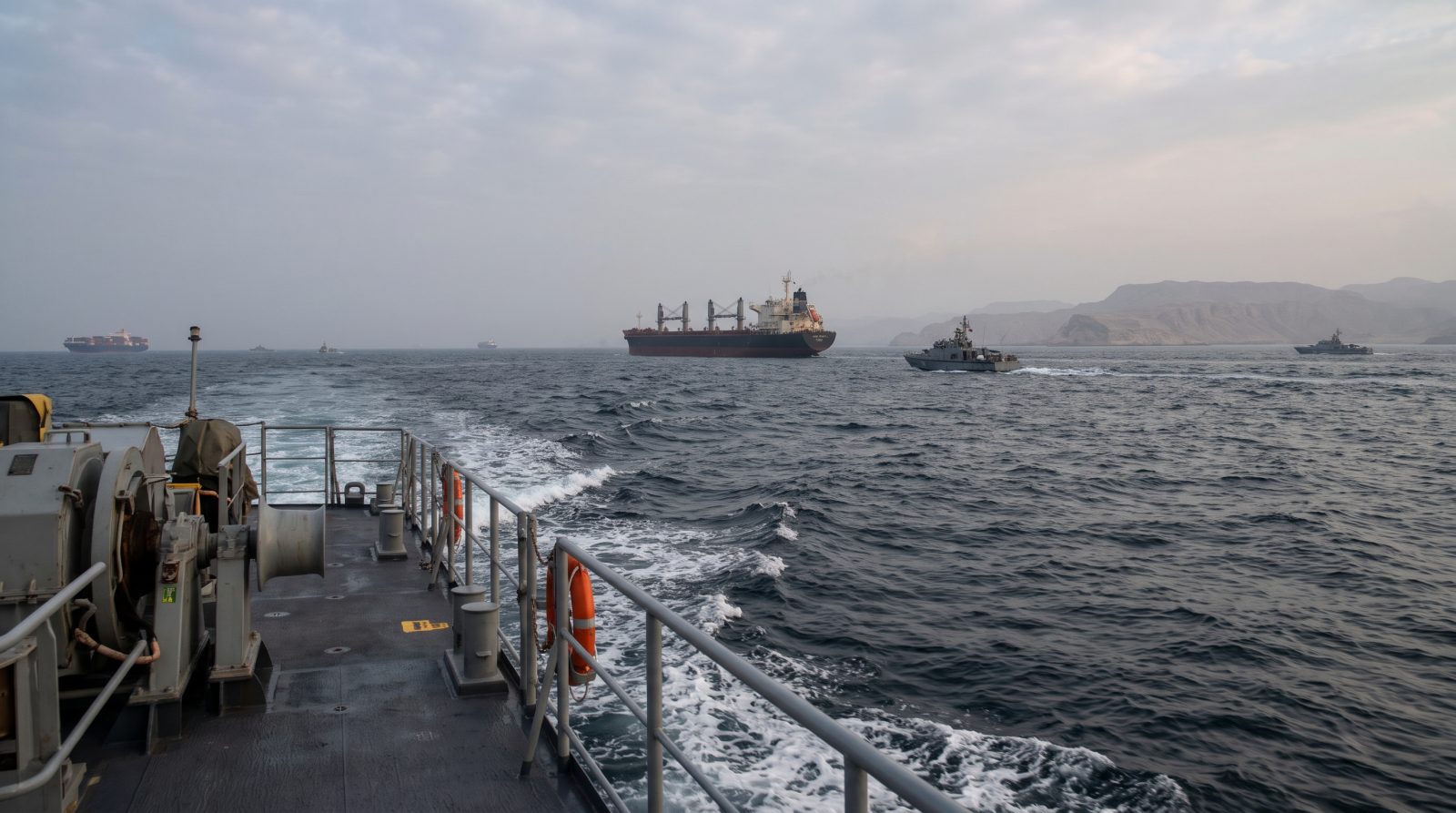
At sea, operational enforcement of commercial shipping restrictions has sharpened. U.S. Central Command (CENTCOM) confirmed that American forces deployed under "Task Force Iron Gate"—a multilateral initiative aimed at choking Iranian sea lanes and ground logistical routes—took direct military action against a commercial vessel in the Gulf of Oman.
According to military statements, a U.S. aircraft fired precision munitions targeting the stern of the Saint Kitts and Nevis-flagged cargo vessel M/V Huda after the ship allegedly ignored repeated maritime hails and attempted to breach naval blockade cordons following a departure from an Iranian port. The vessel was disabled, with American commanders emphasizing that civilian crew members were instructed to evacuate strike zones prior to weapon release.
| Front / Theater | Recent Verified Development | Operational Implications |
|---|---|---|
| Diplomatic Channels | Mediator travel suspended post-U.S. midterms | Stalled negotiations over sanctions, nuclear terms, and blockades |
| Maritime Logistics | CENTCOM disables M/V Huda under Task Force Iron Gate | Severe escalation in commercial war-risk insurance premiums |
| Ballistic Arsenal | IRGC removes 2,000-km (1,200-mile) range ceiling | Expanded targeting radius beyond the Middle East into Southeastern Europe |
| Allied Positions | U.S. pauses major strikes; Israel insists mission continues | Potential tactical divergence regarding future preemptive targets |
Tehran Lifts Ballistic Missile Range Ceilings
In a direct strategic counter-signal, the Islamic Revolutionary Guard Corps (IRGC) announced a fundamental shift in its defense doctrine. Speaking at a press conference in Tehran, IRGC spokesperson Gen. Hossein Mohebbi announced that Iran’s long-standing, self-imposed 2,000-kilometer (1,200-mile) range cap on ballistic missile development has been officially lifted.
The policy reversal follows warnings from Supreme Leader Ayatollah Mojtaba Khomeini that any further direct military threats from the United States or Israel would encounter responses without geographic limitations. While Western intelligence agencies have noted that operational deployments of intercontinental-class systems remain unverified, the removal of doctrinal caps opens the door to retrofitting satellite-launch vehicle technologies for long-range military strike profiles.
Commercial and Regional Ramifications
The intersection of naval interdictions and doctrinal escalation continues to disrupt commercial logistics across the Arabian Peninsula. Major international airlines have extended flight cancellations and rerouting directives across Gulf airspace to circumvent active electronic countermeasure zones and unannounced projectile activities.
With Washington attempting to enforce economic containment without provoking an uncontrollable regional conflict, and Tehran leveraging asymmetrical maritime threats, the upcoming diplomatic window will prove decisive. The balance between de-escalation agreements and multi-theater confrontation now depends on whether regional mediators can revive direct talks before naval skirmishes spiral into broader kinetic engagements.
Related articles