Bangladesh Garment Wage Unrest: What Workers Want and Why It Matters
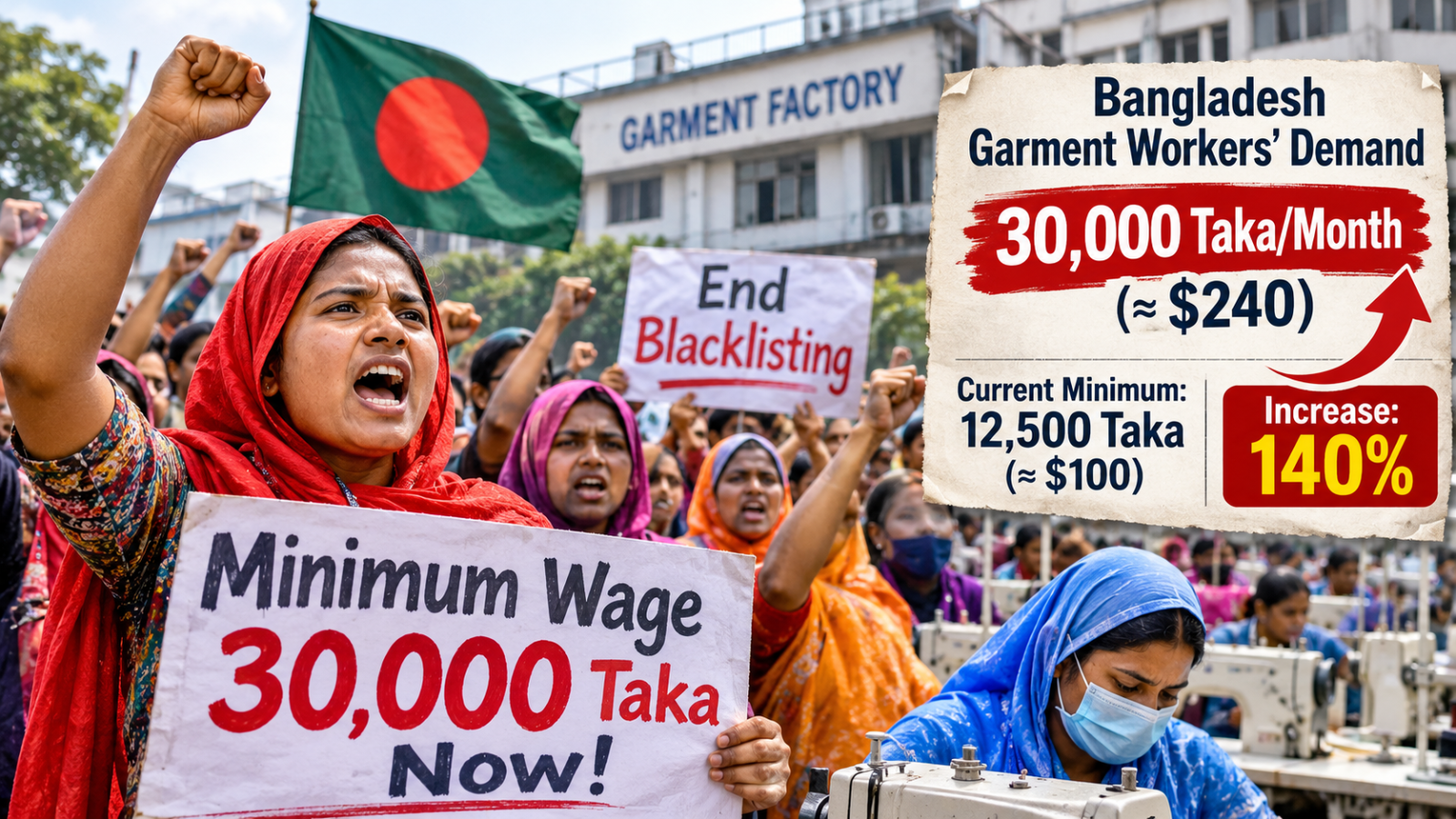
Garment workers in Bangladesh have spent the past weeks marching, blocking highways and walking out of factories to demand a minimum monthly wage of 30,000 taka, about $240. The current minimum, set in late 2023, is 12,500 taka, so the demand is a rise of 140%. Factories in the industrial belts around Dhaka have been shut in waves, owners are threatening to walk away from wage talks, and a government wage board is trying to settle the question. The outcome matters well beyond Bangladesh, because garments make up roughly four-fifths of its exports and the clothes are sold across the US and Europe.
Last updated: 15 November 2026. The situation is changing daily and figures from the ground differ by source. Check local and official updates before relying on any number here.
Key Takeaways
- Workers want a minimum wage of 30,000 taka a month, up from 12,500 taka. Their other demands include an end to the blacklisting of workers.
- On 14 November about 147 factories remained closed in the hubs of Savar, Ashulia and Gazipur. By 15 November, 55 were closed in Savar and Ashulia and most others were working peacefully.
- The government formed a minimum wage board on 1 November, but protests continued after that.
- Garment owners' association BGMEA has threatened to quit wage talks and keep damaged factories closed, using a "no work, no pay" provision of the labour law.
- The industry earns about $38 to $40 billion a year and employs more than four million people.
What's actually happening
The protests didn't start in one place on one day. Workers began demonstrating in October in several industrial zones around the capital, and the pressure built until 1 November, when 177 factories in Savar and Ashulia declared holidays. By 2 November the count had risen to 264. On several days, workers blocked the Dhaka-Aricha highway and the Dhaka-Narayanganj link road. Police used tear gas, water cannons and stun grenades, and there were reports of vandalism at factories and some arrests.
On 14 November, the BGMEA's president said production had been disrupted for between seven and 12 days in some factories, and announced that plants unable to run would stay closed indefinitely from the next day. The following day, authorities said 55 factories remained closed in Savar and Ashulia, 36 of them under Section 13(1) of the Bangladesh Labour Act, 14 indefinitely and five verbally. Thirteen more were reported shut indefinitely in Gazipur. No protests had been reported in Savar and Ashulia by late morning on Sunday, and workers at most factories were working. That's a calmer picture than a few days earlier, though it can change fast.
Why 30,000 taka?
Take the numbers at face value. A worker on the current minimum of 12,500 taka earns roughly $100 a month. Workers say rising living costs and inflation have eaten away their purchasing power. A demand for 30,000 taka sounds enormous, but it's the result of a long gap since the last review.
| Year | Minimum monthly wage (taka) | Context |
|---|---|---|
| 2013 | 5,300 | Set after a wave of protests in Savar and Ashulia |
| Before December 2023 | 8,300 | The starting wage before the 2023 strike |
| December 2023 | 12,500 | Raised after a strike that closed hundreds of factories |
| 2026 demand | 30,000 | Workers' demand; wage board reviewing |
Do the math. The 2023 rise from 8,300 to 12,500 taka was about 51%. The 2026 demand is a 140% jump on 12,500. The industry has been through this cycle before: strikes, a government wage board, a compromise that satisfies nobody completely, and unrest again a few years later.
What the owners and the government say
The BGMEA says it wants the dispute settled through the wage board, not on the streets. Its president has said protests are not appropriate now that a board exists. Owners also complain about vandalism of factories and threaten to quit wage talks if it continues. The usual argument from owners in wage rounds like this, which we haven't confirmed for this one, is that their own costs are rising and that Bangladesh competes with other low-cost countries for orders, so a very large increase could put orders at risk. We haven't verified the finances behind any such claim.
Labour leaders reject the idea that wage talks should wait for calm. They say workers' grievances, including blacklisting, have to be addressed, and one argues that the latest unrest could have been avoided if the wage board had been set up before the protests began. One person quoted in a local report noted that this time there's less coordination between the workers' organisations and the owners' side than in the past. The government's response so far has been to form a minimum wage board on 1 November, with representatives of employers, workers and an independent category, to review the wage structure and recommend a new minimum. It hasn't announced a figure.
What blacklisting means
This is the demand that gets the least coverage, and it matters. Workers say that people who took part in earlier protests end up on lists that make it hard to find another factory job. Ending that practice is a core demand alongside the wage. We couldn't verify how widespread it is, so treat it as the workers' allegation.
Why the world should care
Bangladesh is one of the world's biggest garment exporters, with the sector accounting for about four-fifths of export earnings. How the number of factories is counted varies, with figures of around 2,500 in some reports and more than 4,500 registered with trade bodies in others.
For readers in the United States and India, there are three practical links. First, supply: shutdowns can delay shipments to brands and retailers that source from Bangladesh, so you might see slower deliveries on some items. We haven't seen company-level warnings, so we won't predict any effect on prices. Second, ethics: wages at the bottom of the global apparel chain are a reminder that a very cheap T-shirt has a human cost somewhere. Third, competition: India is itself a major apparel producer, and shifts in Bangladesh's costs and reliability can alter where buyers place orders. How much that matters is hard to say from outside the industry.
Two ways to see the same crisis
The workers' view. Prices have climbed, the minimum wage hasn't, and people on around $100 a month can't keep up. Raising wages is overdue, and the industry can afford to pay more because it earns tens of billions of dollars a year.
The owners' view. A rise of 140% in one step is far beyond what the sector can absorb, margins are thin, buyers push prices down, and repeated factory shutdowns drive orders to competitors. A gradual, negotiated increase is safer.
Both views contain truth. Wages that fall behind living costs create unrest, and a rise that outpaces what buyers will pay can cost jobs. The wage board's job is to find a figure in between, and past rounds have usually ended in compromises, so the final number could land well below 30,000.
If you want to buy more responsibly
- Look for supplier transparency. Brands that publish factory lists and wage information are easier to hold accountable.
- Ask about living wages. A commitment to pay a living wage is stronger than a promise to meet the legal minimum.
- Buy less, buy better. Fewer, longer-lasting items reduce pressure on the cheapest end of the chain.
- Be wary of slogans. "Ethically made" labels are only as good as the evidence behind them.
For another story about a country squeezed by costs, see our report on Mali's fuel blockade, and for a related wage-and-housing struggle in Europe, read about Spain's housing strike.
What to watch next
- The wage board's recommendation: a figure and a date for when it would take effect. No timeline has been announced.
- BGMEA's next move: whether it actually walks out of talks or extends factory closures.
- The protests: whether they flare again in Gazipur, Savar and Ashulia or fade.
- Blacklisting: whether any concrete commitment appears.
- Buyer reactions: statements from major brands about orders and delivery times.
The Factora Take
This is a familiar fight with an unusually high number attached. The demand for 30,000 taka is a bargaining position as much as a forecast, and it would be surprising to see it met in full. But the fact that it's being made, in the face of tear gas and factory closures, says something about how thin the margin has become for people who sew clothes for the world. Our reading is that the likely outcome is a compromise somewhere between the 2023 level and the 2026 demand, with a delay and some bitterness. The harder question is what happens after: whether this cycle of strike, board and unrest gets replaced by something steadier, such as regular, automatic wage reviews. If it doesn't, we'll be writing this story again in a few years.
This article is for general information only. Figures come from official and published reports and may be revised. Currency conversions are approximate.
Frequently Asked Questions
Why are Bangladesh's garment workers protesting?
They want a minimum monthly wage of 30,000 taka, up from 12,500 taka, and an end to blacklisting. They say rising living costs and inflation have eroded their pay.
How many factories are closed?
It changes daily. About 147 were closed on 14 November in Savar, Ashulia and Gazipur, and authorities said 55 remained closed in Savar and Ashulia on 15 November.
What is the minimum wage board?
A body formed by the government on 1 November, with representatives of employers, workers and an independent category, to review the garment minimum wage and recommend a new one.
How important is the garment industry to Bangladesh?
It earns about $38 to $40 billion a year, accounts for roughly four-fifths of the country's export earnings and employs more than four million people.
Will this affect clothing prices or deliveries in the US or India?
It may delay some shipments if shutdowns continue, but we haven't seen confirmed price effects. Watch for statements from brands and retailers that source from Bangladesh.
Related articles