Fed Raised Rates and Mortgages Are Near 7.2%: What It Means for Your Money
Last updated: 10 November 2026. Rates and economic data change frequently. This article is for general education only and is not personalised financial advice. Check current rates with your lender or bank and consider speaking to a licensed professional.
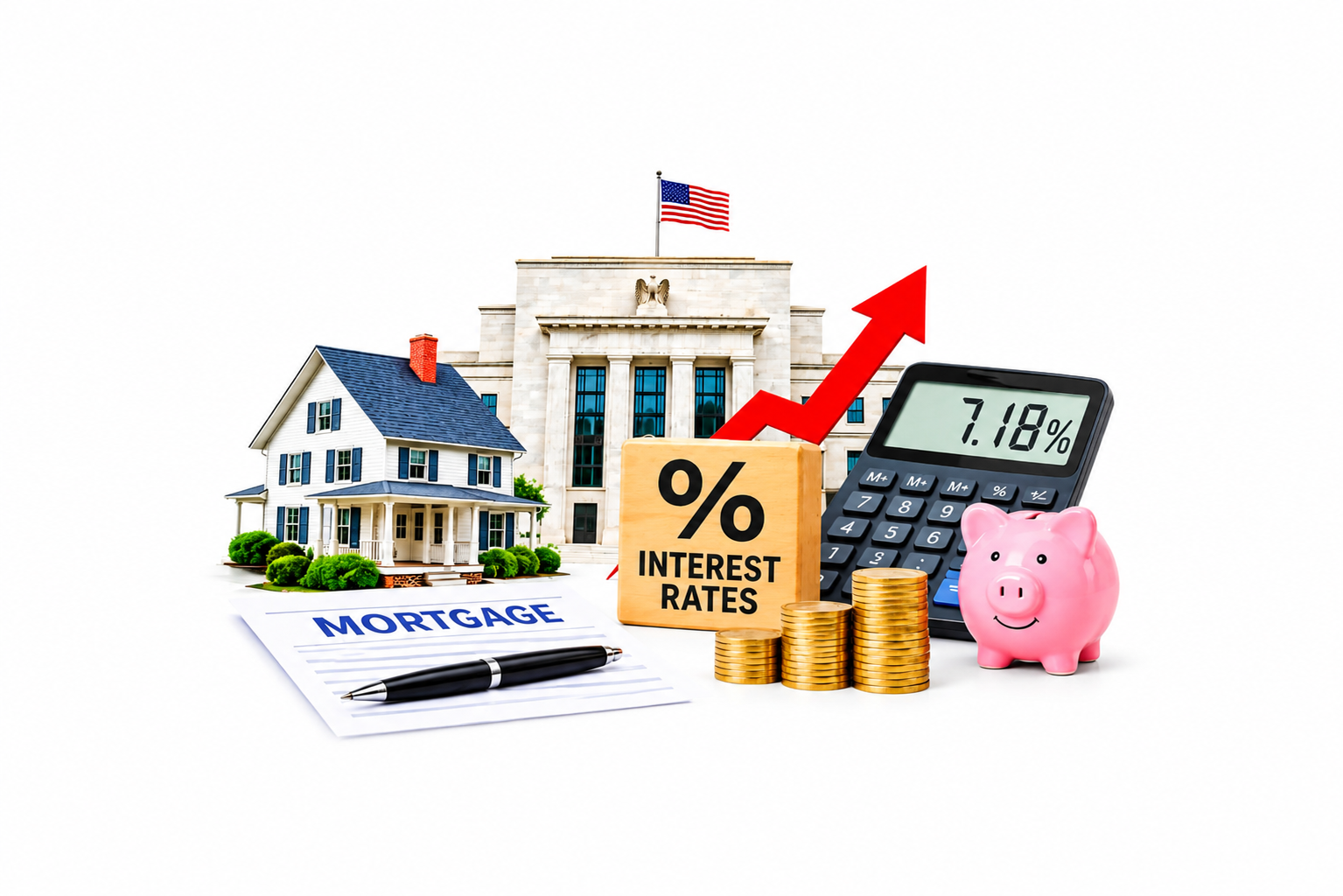
For most of 2026, Americans were waiting for interest rates to come down. Instead, the Federal Reserve raised them. In September, the Fed lifted its benchmark rate by a quarter of a percentage point, its first increase since 2023. In October it held steady. The 30-year mortgage rate has been hovering around 7.2 percent, up sharply from about 6.1 percent early in the year. If you are buying a home, carrying credit card debt, or deciding where to keep your savings, here is what the latest moves mean in plain English.
Key Takeaways
- The Fed's target range is now 3.75 to 4 percent. It held rates at its 28 October meeting by a 10-2 vote, and both dissenters wanted another quarter-point hike.
- US inflation rose to 3.7 percent in September, up from 3.4 percent in August, driven largely by a surge in gasoline prices.
- The average 30-year fixed mortgage rate was 7.18 percent in the week of 5 November, after peaking around 7.4 percent in early to mid October, its highest level in nearly three years.
- Markets have been pricing in the possibility of more rate hikes, so variable-rate borrowers should plan for costs that may rise further.
- Higher rates make borrowing more expensive but also make safe savings more attractive.
What the Fed Did, and Why
The Federal Open Market Committee raised the federal funds rate by 25 basis points in September to a range of 3.75 to 4 percent, reversing course after a long period of waiting for cuts. At its 28 October meeting, it left the range unchanged, saying it wanted to gather more information before deciding what to do next. Fed Governor Lisa Cook and Cleveland Fed President Beth Hammack voted against holding because they preferred another hike. It was the first split vote of the year.
The reason is inflation. After peaking around 4.2 percent in May, annual inflation eased in the summer and then jumped again to 3.7 percent in September. The government's data shows that gasoline rose about 9 percent in September alone and was up roughly 34 percent from a year earlier, as the conflict around Iran disrupted oil flows through the Strait of Hormuz. We explained why oil and fuel prices remain high even when the strait partly reopens in our guide on why fuel prices stay high after Hormuz reopens. Core inflation, which strips out food and energy, was lower at 2.6 percent, which is one reason some officials want to be patient rather than act on a single report.
Fed Chair Kevin Warsh has also said he does not favour giving detailed signals about the future path of rates, which means markets may be more surprised by decisions than they used to be. The President has publicly argued that rates should be much lower, while the Fed chair has said politics did not influence the October decision. Whatever your view, the practical point is the same: nobody can say for certain where rates go next.
What It Means for Your Money
Mortgages and home buying
Mortgage rates do not follow the Fed's rate directly. They tend to track longer-term bond yields, which have been elevated. Still, the effect on affordability is large. Here is an illustration on a $400,000 loan with a 30-year fixed term, counting principal and interest only and excluding taxes, insurance and fees:
| Mortgage rate | Approximate monthly payment | Difference |
|---|---|---|
| 6.1% (early 2026 level) | About $2,430 | Baseline |
| 7.2% (recent level) | About $2,715 | About $285 more per month, or roughly $3,400 per year |
If you are buying, shop several lenders because quotes can differ meaningfully, compare the annual percentage rate and fees, and consider how long you plan to stay in the home. If you already have a fixed-rate mortgage, your payment does not change.
Credit cards, HELOCs and other variable debt
Most credit cards and home equity lines of credit carry variable rates that follow the prime rate, which usually sits about three percentage points above the top of the Fed's range, so roughly 7 percent today. When the Fed raises rates, these costs rise within a billing cycle or two. Paying down variable-rate balances is one of the most reliable ways to protect your budget.
Car loans
New auto loans are priced off market rates and your credit profile, not directly off the Fed, but higher benchmark rates tend to push loan costs up over time. Comparing offers from banks, credit unions and dealers can save real money.
Savings accounts and CDs
The upside of higher rates is that safe savings can pay more. High-yield savings accounts and certificates of deposit generally adjust with the broader rate environment, though banks move at different speeds, so it pays to compare. Because rates could still rise, some savers spread money across several CD maturities rather than locking everything in at one rate. We compared the options in our piece on high-yield savings accounts versus CDs.
Stocks and bonds
Higher rates can pressure stock valuations and push bond prices down in the short term, but they also raise the income new bonds pay. Long-term investors are usually better served by a steady plan than by trying to react to every Fed meeting.
Practical Steps to Consider
- List your variable-rate debts and focus extra payments on the highest-rate balance first.
- Check your emergency fund and keep it in an insured account that pays a competitive rate.
- Get multiple mortgage quotes if you are buying or refinancing, and ask lenders about fees as well as rates.
- Do not stretch your budget based on the hope that rates will fall soon. Make sure you could afford the payment today.
- Stay diversified and avoid making big investment decisions from a single headline.
What to Watch Next
- The October inflation report, scheduled for release on 10 November, will show whether the gasoline surge continued.
- The Fed's December meeting, the last of the year, where markets will be watching for another hike or a continued pause.
- Oil prices. Because energy is such a large driver of inflation right now, developments around Hormuz and diplomacy can quickly move expectations.
- Mortgage rate trends, published weekly by Freddie Mac.
The Factora Take
The central message of this moment is that the era of waiting for cheap money has been postponed. That is painful for buyers and borrowers, but it rewards savers and people who manage debt carefully. You cannot control the Fed or oil prices, but you can control your debt mix, your emergency fund and the size of the payments you commit to. Those choices will matter more than any single rate forecast.
Frequently Asked Questions
What is the Fed's interest rate right now?
The federal funds target range is 3.75 to 4 percent, unchanged at the 28 October 2026 meeting after a quarter-point increase in September.
Why did the Fed raise interest rates in 2026?
Because inflation stayed above its 2 percent goal and was pushed higher by energy prices, especially gasoline.
Will mortgage rates go down soon?
Nobody knows. Mortgage rates depend on bond yields, inflation and the Fed's path, and forecasts vary. Rates eased slightly in late October and early November, but they remain much higher than at the start of the year.
Should I pay off credit card debt or save more?
Many planners suggest building a small emergency cushion first and then paying down high-interest variable debt aggressively, because card interest usually exceeds what savings accounts pay. Your situation may differ.
Do Fed rate hikes affect my existing fixed-rate mortgage?
No. A fixed-rate mortgage keeps the same interest rate for the life of the loan, although adjustable-rate loans and home equity lines can change.
Related articles