Saver's Match 2027: Up to $1,000 From the Government for Retirement
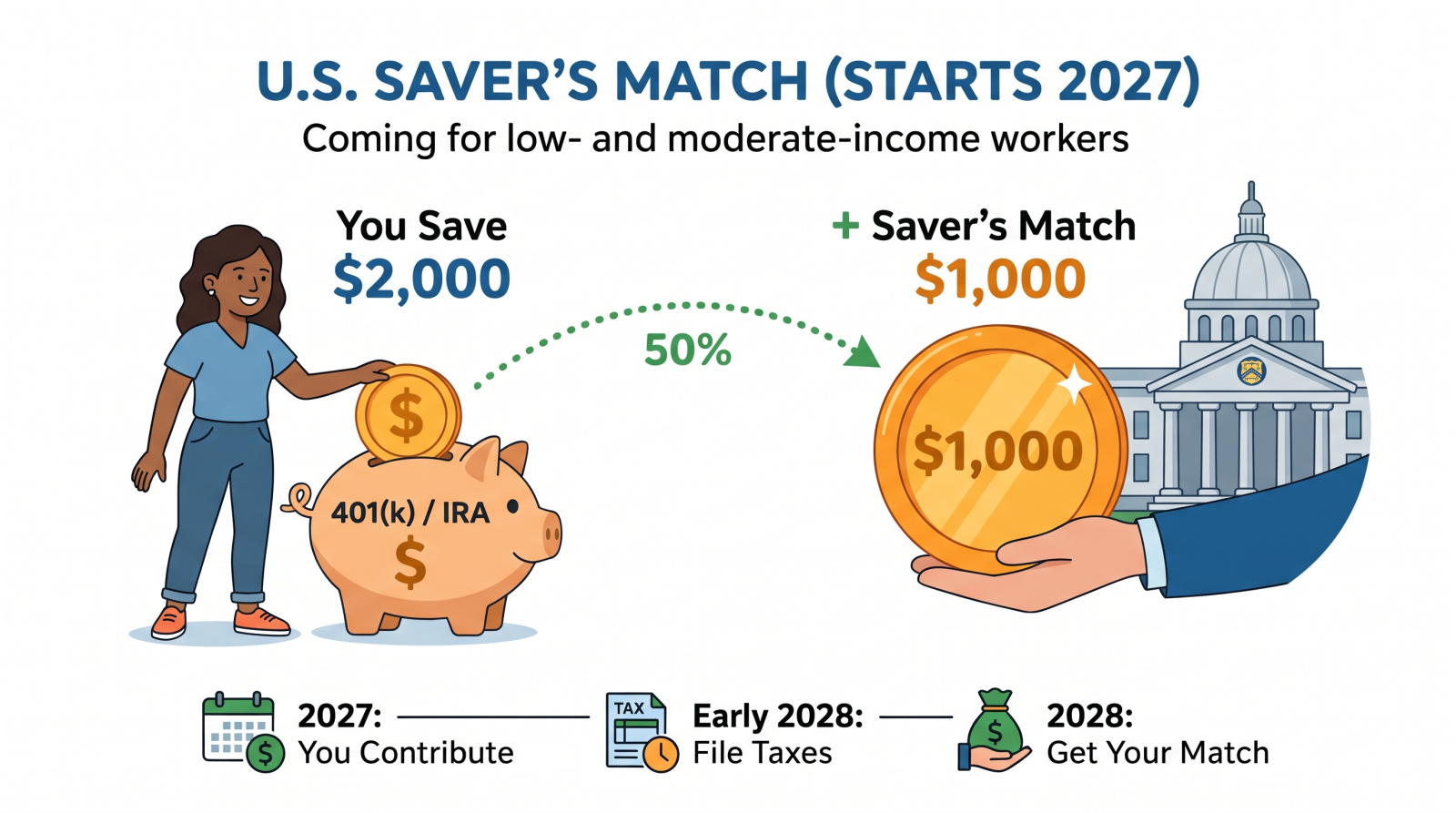
Starting with the 2027 tax year, a new US program called the Saver's Match will pay eligible low- and moderate-income workers a government contribution of up to $1,000 a year into their retirement account. The match is 50% of the first $2,000 you save, so saving $2,000 in 2027 can earn $1,000. The money does not arrive in 2027, though: Treasury is scheduled to start paying it in 2028, after you file your 2027 tax return.
Last updated: 12 November 2026. Treasury and the IRS are still finalising some details, so rules can change before the program starts.
Key Takeaways
- The Saver's Match is created by the SECURE 2.0 Act and replaces the Saver's Credit for tax years beginning after 31 December 2026.
- The match is 50% of the first $2,000 contributed, for a maximum of $1,000 per person per year.
- Eligibility depends on filing status and modified adjusted gross income, and the match shrinks as income rises.
- Treasury plans to deposit the match directly into your retirement account, rather than giving you a tax credit.
- Retirement plans and IRA providers are not required to accept the match, so your choice of account matters.
How the Saver's Match Works
Today's Saver's Credit is a non-refundable tax credit. It can reduce the tax you owe, but if you owe little or nothing, it may be worth very little. The Saver's Match is different. It is a government contribution added to your retirement savings, so it can help workers who owe no federal income tax.
The program covers contributions to IRAs and to employer plans such as 401(k), 403(b) and governmental 457(b) plans. Contributing does not automatically trigger a match. You claim it when you file your tax return, and you name the account that should receive it. Spouses qualify separately, so a couple who each save $2,000 can each receive a match.
Who Qualifies? The Income Limits
The match uses your modified adjusted gross income (MAGI) for 2027. The full 50% applies up to a lower income level, then it phases down to zero at the upper level shown below.
| Filing status | Full 50% match up to (MAGI) | Match ends at |
|---|---|---|
| Single and others | $20,500 | $35,500 |
| Head of household | $30,750 | $53,250 |
| Married filing jointly | $41,000 | $71,000 |
Our arithmetic: the phase-out range is $15,000 wide for single filers ($35,500 minus $20,500), $22,500 for heads of household and $30,000 for joint filers. Those starting points rise with inflation after 2027, so check the final figures. Other eligibility conditions apply, and you should read the IRS guidance for your situation.
A Simple Example
- Contribute $2,000 in 2027 and qualify for the full match: the match is $1,000.
- Contribute $1,000: the match is 50% of $1,000, which is $500.
- Contribute $4,000: the match is still capped at $1,000, because only the first $2,000 counts.
These examples assume a full 50% match. If your income falls inside the phase-out range, the percentage will be lower.
Why the Money Arrives Late
You make qualifying contributions during 2027. Your eligibility is decided when you file your 2027 return in 2028, so Treasury will pay the match after that. For the first year, savers should plan for a gap between when they contribute and when the match shows up.
The IRS also set a transition rule. An IRA contribution made between 1 January and 15 April 2027 can count either as a 2026 contribution for the old Saver's Credit or as a 2027 contribution for the new match, depending on how it is designated.
What Treasury Has Still Not Settled
In Notice 2026-48, issued on 7 August 2026, Treasury and the IRS described their intended approach and asked for public comments, which were due on 5 October. Key open points include:
- How the money is delivered. Treasury plans to send matches through a "conduit" IRA that then moves the money to your chosen account.
- Roth treatment. For people who want the match in a Roth IRA, Treasury is considering a conversion process.
- Provider participation. Plans and IRAs are not required to accept the money directly, so some providers may decline.
- Tax treatment. The match is not counted as income when deposited, but withdrawals are taxed unless rolled over to another retirement account.
An executive order also directs Treasury to launch a website listing low-cost IRA providers by 1 January 2027, aimed at self-employed workers and employees without a workplace plan.
Practical Steps for 2027
- Estimate your 2027 income. Check which row of the table you may fall into.
- Look for a provider that accepts the match. Ask your employer's plan or IRA provider before you pick one.
- Aim for the first $2,000. That is the amount that earns the full match.
- Keep records. Save statements showing your 2027 contributions for tax time.
- Watch for final rules. Treasury may change details before January.
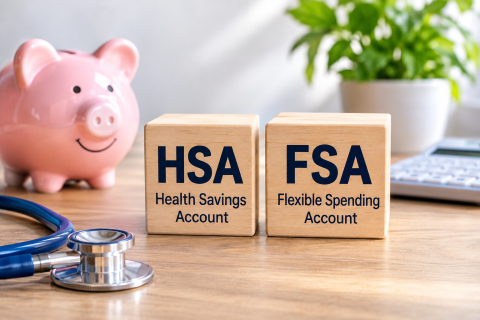
If you also use a health savings account or an FSA, see our guide to HSA vs FSA limits for 2027.
The Factora Take
A guaranteed 50% return on the first $2,000 is rare in personal finance, which makes the Saver's Match worth knowing about, even though it applies only to people below certain incomes. The catch is complexity: delayed payment, provider choice and unfinished rules. The best preparation is simple. Know your likely income, pick a provider that welcomes the match and start saving early in 2027, while keeping an eye on final guidance.
This article is for education and information only. It is not personalised tax, legal or financial advice. Tax rules and eligibility vary, so check IRS guidance or ask a qualified tax professional before deciding.
Frequently Asked Questions
What is the Saver's Match?
It is a federal program, starting with the 2027 tax year, that pays a matching contribution of up to $1,000 a year into the retirement accounts of eligible low- and moderate-income savers.
When will I receive the money?
Treasury is scheduled to pay the first matches in 2028, after you file your 2027 tax return.
Does it replace the Saver's Credit?
Yes. The Saver's Match replaces the Saver's Credit for tax years beginning after 31 December 2026.
Can a couple both get the match?
Yes. Spouses qualify separately, so each spouse can receive a match on their own first $2,000 of contributions, if they meet the income rules.
Do all 401(k) plans and IRAs accept the match?
No. Plans and IRA providers are not required to accept Saver's Match deposits directly from Treasury, so ask your provider.
Related articles