Texas’s "Dexit" Court Shakeup: How an Obscure Appellate Election Just Upended America’s Corporate Incorporation Battle

Texas’s "Dexit" Court Shakeup: How an Obscure Appellate Election Just Upended America’s Corporate Incorporation Battle
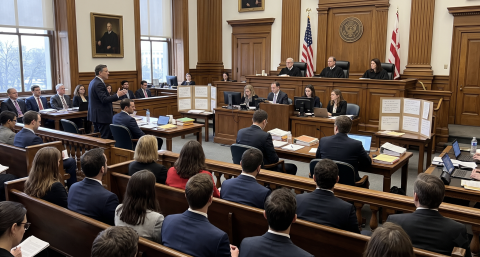
While national political coverage following the November 3, 2026 midterm elections has focused intensely on Capitol Hill majorities and governor’s mansions, one of the most consequential shifts in American corporate governance occurred down-ballot in a judicial race few everyday voters even knew existed. In a sweeping electoral upset, Texas voters unseated all three inaugural justices of the Fifteenth Court of Appeals—the specialized statewide appellate tribunal engineered specifically to rival the legendary Delaware Court of Chancery and lure Fortune 500 corporations to reincorporate in the Lone Star State.
Within days of the election, the court entered what legal observers described as administrative "triage" mode, abruptly canceling four major oral arguments scheduled for December 2026 as the outgoing bench prepared to hand over its docket to a newly elected Democratic majority on January 1, 2027.
Beneath the dry procedural notices lies a high-stakes institutional story that rarely reaches mainstream headlines: how a bold legislative experiment to break Delaware’s century-long monopoly over American corporate charters collided directly with Texas’s partisan judicial election system—creating immediate uncertainty for corporate boards, institutional investors, and legal strategists nationwide.
What Is "Dexit" and Why Did Texas Build a Special Business Court?
For more than a hundred years, the tiny state of Delaware has served as the undisputed legal capital of corporate America. Roughly two-thirds of all Fortune 500 companies—and the vast majority of publicly traded U.S. corporations—are incorporated in Delaware, not because their factories or headquarters sit there, but because of the Delaware Court of Chancery. Unlike ordinary trial courts, the Court of Chancery uses appointed, expert business judges rather than juries, producing a predictable, rapid, and deeply respected body of corporate precedent.
Over the past several years, however, a movement dubbed "Dexit" (Delaware Exit) gained momentum among major technology founders, energy executives, and conservative legal reformers. Frustrated by Delaware rulings that invalidated massive executive compensation packages and heightened scrutiny over controlling shareholders, corporate leaders began urging companies to move their legal domiciles to states perceived as more deferential to corporate boards and executive discretion.
Texas seized that opportunity aggressively. Through House Bill 19 in 2023—and subsequent expansions under House Bill 40 in 2025—the Texas Legislature constructed a two-tier specialized judicial architecture that opened its doors on September 1, 2024:
- The Texas Business Court: A specialized trial-level tribunal divided into regional divisions (including Austin, Dallas, Fort Worth, Houston, and San Antonio) dedicated exclusively to complex corporate governance disputes, shareholder derivative suits, and high-dollar commercial litigation exceeding $5 million.
- The Fifteenth Court of Appeals: A brand-new, statewide intermediate appellate court headquartered in Austin with exclusive appellate jurisdiction over every ruling issued by the Texas Business Court, as well as major civil litigation involving the State of Texas, state agencies, and constitutional challenges to state statutes.
By funneling all business appeals into a single three-justice statewide appellate bench rather than scattering them across Texas’s 14 regional courts of appeals, lawmakers intended to guarantee uniform, predictable corporate case law that could compete head-to-head with Delaware.
The Structural Flaw: Appointed Trial Judges vs. Elected Appellate Justices
In designing this corporate judicial engine, Texas lawmakers faced a constitutional constraint unique to state politics. While Delaware’s Court of Chancery and Delaware Supreme Court consist entirely of judges appointed by the governor and confirmed by the state senate, the Texas Constitution mandates that appellate justices be chosen directly by voters in partisan statewide elections.
To launch the Fifteenth Court of Appeals in September 2024, Governor Greg Abbott exercised his initial appointment authority to seat three prominent conservative jurists: Chief Justice Scott Brister, a former Texas Supreme Court justice, alongside Justices Scott Field and April Farris. Meanwhile, the trial-level Business Court judges were structured as gubernatorial appointees serving renewable two-year terms.
That hybrid design created a striking institutional vulnerability. Even though Governor Abbott reappointed all ten sitting trial-level Business Court judges in July 2026 to two-year terms extending into 2028, the three inaugural justices on the Fifteenth Court of Appeals had to face statewide voters for the very first time on November 3, 2026.
| Judicial Layer | Selection Mechanism | Pre-Election Bench (2024–2026) | Post-Election Reality (Taking Office Jan 2027) |
|---|---|---|---|
| Texas Business Court (Trial Level) | Appointed by Governor with Senate confirmation (2-year terms) | 10 judges appointed by Gov. Greg Abbott across five active urban divisions | Sitting judges remain in office until September 2028; future appointments subject to divided government |
| Fifteenth Court of Appeals (Statewide) | Partisan statewide election (6-year staggered terms) | Chief Justice Scott Brister, Justice Scott Field, Justice April Farris | Swept by Democratic challengers Jerry Zimmerer, Tom Baker, and Marc Meyer |
| Supreme Court of Texas (Final Review) | Partisan statewide election (9-member bench) | 9–0 Republican majority | 5–4 Republican majority after Democrats won four seats on the high court |
November 3, 2026: A Complete Sweep and Immediate Docket Triage
When the votes were tallied on November 3, 2026, alongside Democratic gubernatorial nominee Gina Hinojosa’s victory and Democratic gains on the Texas Supreme Court, the Fifteenth Court of Appeals experienced a total generational and ideological turnover. Challengers Jerry Zimmerer, Tom Baker, and Marc Meyer defeated all three incumbents—Brister, Field, and Farris—replacing the entire bench simultaneously.
The operational fallout inside the Austin courthouse was immediate. Recognizing that hearing complex appeals in December 2026 would leave the outgoing justices barely three weeks to draft landmark opinions before leaving office on December 31, the Fifteenth Court canceled four major oral arguments scheduled for December. Legal practitioners familiar with the docket noted that the court shifted into triage mode—focusing exclusively on resolving cases already argued while leaving major pending disputes for the incoming bench in January 2027.
At the same time, Democrats captured four seats on the nine-member Supreme Court of Texas, narrowing the Republican majority on the state's highest civil court from 9–0 to a razor-thin 5–4 margin. For corporate litigators, the combined result transformed Texas’s appellate landscape overnight.
What the Judicial Realignment Means for Corporate Boards and "Dexit"
Corporate governance attorneys across Houston, Dallas, and Wilmington are now recalculating the risk calculus for companies considering moving their charters to Texas. While the trial-level Texas Business Court will retain its current bench until September 2028—when Governor-elect Hinojosa will nominate replacements subject to confirmation by a Republican-controlled Texas Senate—every significant ruling those trial judges make on shareholder rights, fiduciary duties, and pre-suit demand rules will now be reviewed first by the newly elected Fifteenth Court of Appeals.
Three specific legal battlegrounds will test the new court immediately in early 2027:
- The Business Judgment Rule & Board Discretion: Companies considering reincorporating in Texas sought assurance that judges would strictly defer to corporate boards on executive pay, mergers, and poison-pill defenses. Appellate analysts note that the incoming Fifteenth Court justices may scrutinize broad corporate defenses more closely than the inaugural bench, testing whether Texas remains as uniformly management-friendly as Dexit proponents assumed.
- Pre-Suit Demand & Shareholder Derivative Litigation: In late 2026, the Texas Business Court began issuing foundational rulings on whether minority shareholders must formally demand action from a board before filing derivative lawsuits. Those threshold procedural rulings now face appellate review before a completely reshaped bench.
- State Constitutional & Regulatory Litigation: Because the Fifteenth Court also holds exclusive intermediate appellate jurisdiction over lawsuits challenging state laws and agency rules, the new bench will rule on high-profile disputes over state regulatory authority before those cases ever reach the closely divided 5–4 Texas Supreme Court.
Ultimately, the November 2026 Fifteenth Court of Appeals election exposes an enduring paradox in American legal reform. You can draft pro-business corporate statutes and build sleek specialized courtrooms, as Texas did in 2024, and just as federal courts apply strict statutory rules in disputes like the 436th seat challenge over congressional apportionment or San Ygnacio's 1951 land condemnation precedent, institutional rules govern outcomes. Yet as long as appellate seats are decided at the ballot box, corporate predictability remains permanently tethered to the shifting currents of the American electorate.
Related articles