San Ygnacio’s 1951 Precedent: How an Obscure Texas River Town Fights Federal Condemnation
The 1951 Precedent: How an Obscure 400-Resident Texas River Settlement Revived a Forgotten Treaty Exemption
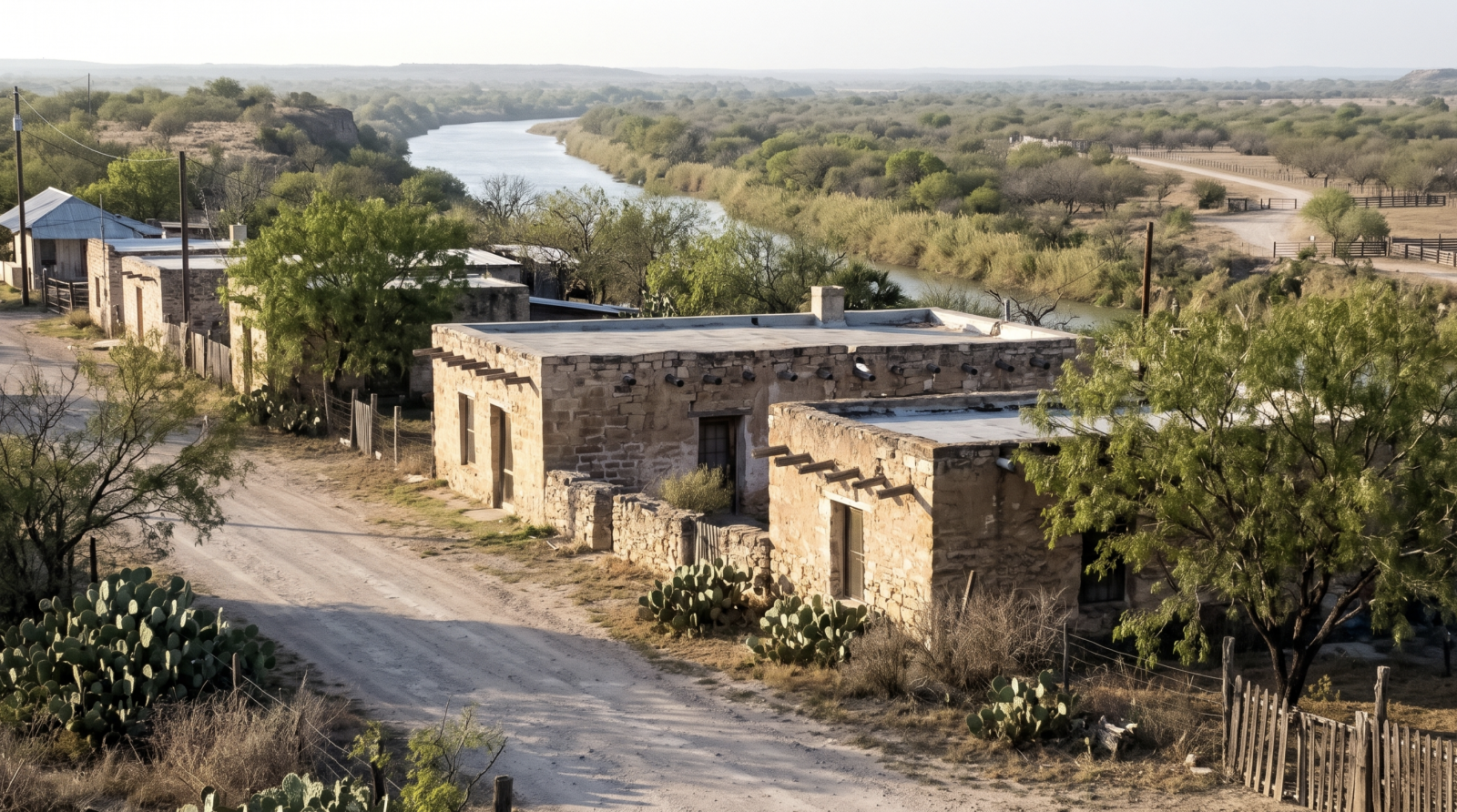
In the vast, arid expanse of Zapata County, Texas, sits San Ygnacio—a quiet, sun-baked border community of barely 400 residents. Established in 1830 by Don Jesús Treviño, the town is renowned among architectural historians for its rare 19th-century sandstone masonry and hand-hewn cedar vigas. Yet, while mainstream national headlines remain fixated on sprawling geopolitical debates and supreme court maneuvers across the American West, this tiny Mexican-American enclave has quietly resurfaced one of the most obscure administrative legal precedents in United States history: a 75-year-old water treaty petition that saved the town from literal obliteration in 1951.
Today, as heavy industrial earthmovers and 30-foot steel bollards encroach along the bluffs of the lower Rio Grande, San Ygnacio's multi-generational landowners are neither deploying typical political action committees nor relying solely on modern environmental briefs. Instead, they are entering courtrooms with a yellowed, hand-signed federal carve-out negotiated when Harry S. Truman occupied the Oval Office.
At a time when the federal government wields seemingly absolute eminent domain and waiver authority along the international border, the survival of this singular enclave offers a masterclass in historical resistance. It highlights the friction between national security imperatives and historical property rights, where old Spanish land grants and Truman-era water treaties meet modern 21st-century borders.
The Forgotten Water Disaster of 1951: The Falcon Dam Condemnation
To understand the strange legal standoff currently unfolding on San Ygnacio’s riverbanks, one must look back to the execution of the 1944 Water Treaty between the United States and Mexico. To manage irrigation flow, hydroelectric power, and flood mitigation, the two nations authorized the construction of the colossal Falcon International Dam, located roughly 30 miles downriver.
By the early 1950s, federal surveyors determined that the resulting reservoir would inundate dozens of historic ranching communities along the river basin. Historic towns such as Zapata (Old Zapata), Falcon, and Lopeño were comprehensively condemned under federal eminent domain. Homes, cemeteries, and centuries-old Spanish land grant structures were bulldozed or permanently submerged beneath billions of gallons of water.
The human cost of this project was immense. Families who had lived on the land since the mid-18th century, dating back to the original Spanish land grants (porciones) of the Escandón era, were given meager compensation and forced to abandon their ancestral homesteads. The historic town of Zapata, which featured ornate sandstone architecture similar to San Ygnacio, was entirely demolished, its physical history drowned under the rising waters of Falcon Lake. For the residents of the basin, the dam was not merely an engineering marvel; it was a cultural catastrophe.
San Ygnacio was marked for the exact same fate. Federal planners drew boundary lines that would have declared the entire village an uninhabitable floodplain, executing total condemnation and forcing its residents into relocated suburban tracts. The International Boundary and Water Commission (IBWC) had determined that the entire community would fall within the flood pool, meaning every home, corral, and historical chapel would be forfeited to the federal government.
The 222-Signature Miracle
Refusing to disperse, 222 townspeople assembled inside the historic Treviño Fort in 1951. The fort, built as a defensive sandstone compound to protect early settlers from frontier raids, once again became a sanctuary, this time against bureaucratic erasure. Among those gathered were matriarchs, ranchers, and local merchants, many of whom could only sign with an "X" or a hasty flourish in Spanish. They drafted a meticulous, legally defiant petition to the International Boundary and Water Commission (IBWC) and federal authorities, documenting the topographical bluffs that naturally elevated the town above the projected crest of the reservoir. They argued that blanket condemnation was an unconstitutional, unnecessary taking of non-flooded cultural ground.
The petitioners presented extensive topographical and hydrological arguments. They claimed that the natural high bluffs of San Ygnacio—rising significantly higher than the lowlands of Old Zapata and Lopeño—would keep the town well above any plausible reservoir overflow. To support their claims, they cited historical flood records, showing that even the most catastrophic Rio Grande floods of the past century had failed to submerge the Treviño Fort. It was a sophisticated blend of localized hydrological observation and a fierce defense of ancestral land.
In a rare bureaucratic retreat, federal officials relented. After conducting fresh surveys that validated the residents' elevations, the IBWC redrew its condemnation perimeter, carving a razor-thin jurisdictional exclusion zone around San Ygnacio's riverfront. The town survived intact—becoming the only river settlement in the entire reservoir basin to escape drowning by the federal government. It was an unprecedented victory that created a unique legal carve-out, one that remains in the federal archives to this day.
Fast Forward: Modern Heavy Equipment Meets 18th-Century Bluffs
Decades passed, and San Ygnacio settled into quiet preservation. In 1972, its historic core was inscribed onto the National Register of Historic Places, recognized as the oldest intact settlement in the Lower Rio Grande Valley. Its limestone homes, riverfront bird sanctuaries, and communal boat ramps remained untouched by federal projects. The town became a sanctuary for artists, historians, and tourists seeking to experience the untouched, rugged beauty of the 19th-century Texas-Mexico frontier.
That isolation vanished when federal infrastructure contracts ordered the installation of 30-foot-tall steel border bollards, gravel staging roads, and high-intensity surveillance towers along the immediate waterline. Under the Illegal Immigration Reform and Immigrant Responsibility Act of 1996, the Department of Homeland Security (DHS) was granted the authority to bypass nearly all federal, state, and local laws to expedite the construction of barriers along the international boundary. This meant that the historic, environmental, and cultural protections San Ygnacio had relied on for decades were effectively wiped away with the stroke of a pen.
When diesel excavators severed centuries-old mesquite roots and punctured community irrigation lines on the bluff, private landowners—many in their 80s and 90s whose parents had signed the 1951 charter—walked directly into the tracks of the construction equipment. The visual contrast was stark: elderly residents, clutching original Spanish land grants and Truman-era boundary maps, standing face-to-face with federal contractors backed by the vast authority of the U.S. government.
| Historical Element | 1951 Falcon Dam Crisis | Modern Infrastructure Standoff |
|---|---|---|
| Federal Objective | Condemnation of riverfront for the Falcon Reservoir basin | Erection of 30-foot steel barriers & patrol corridors |
| Core Threat | Total flooding and erasure of historic sandstone structures | Destruction of riverfront access, sole water supply, and historic bluffs |
| Community Defense Mechanism | 222-resident petition documenting specific elevation & cultural lineage | Invoking original IBWC carve-out boundaries and deeds of title |
| Jurisdictional Status | IBWC redrew boundary, creating a unique historical exclusion | Disputed boundary between private property lines and IBWC federal easements |
The Property Line Conundrum: Who Owns the Riverfront?
What makes San Ygnacio’s legal fight an extraordinary anomaly in contemporary U.S. jurisprudence is the tangled clash between modern federal waiver authorities and original Spanish-Mexican land grant titles.
Under federal immigration statutes dating to 1996, Department of Homeland Security secretaries hold unprecedented powers to waive environmental, historic-preservation, and clean-water regulations to accelerate border construction. These waivers have effectively silenced standard lawsuits under the National Environmental Policy Act (NEPA) and the Endangered Species Act in federal court. For most communities, this meant legal resistance was over before it could even begin.
However, San Ygnacio's defense bypasses environmental laws entirely, anchoring its fight in title law and the 1951 boundary exception:
- The IBWC Easement Ambiguity: While federal authorities contend that construction is occurring exclusively on land acquired or regulated by the IBWC, local ranchers have demonstrated that their family deeds stretch uninterrupted to the river’s low-water mark—deeds that were specifically protected by the Truman-era carve-out. Because the 1951 exception prevented the government from buying this land, it remains private property, putting federal teams at risk of unauthorized trespass.
- The Criminal Trespass Maneuver: Rather than waiting months for federal appeals courts to rule, landowners have filed local criminal trespass complaints against federal contractors, asserting that private easements were never legally condemned by court proceedings. Since local Sheriff's deputies and county courts must uphold private property deeds, this strategy has created a logistical headache for federal agencies.
- The Drinking Water Threat: The Rio Grande serves as San Ygnacio's sole municipal drinking water intake. Construction within the fragile alluvial bluffs threatens to destabilize the intake system, bringing international treaty obligations regarding shared water infrastructure directly into conflict with rapid security mandates. Under the 1944 treaty, any work affecting the river's flow or quality requires formal bilateral approval—a process that has been completely ignored in the rush to build.
The Historic and Architectural Stake of Treviño Fort
At the center of San Ygnacio’s modern resistance sits the Treviño Fort, a massive sandstone structure built by the town’s founder, Don Jesús Treviño, in 1830. More than just a historic site, the fort remains a symbol of survival. It represents an era when early settlers had to rely on thick sandstone walls, defensive battlements, and communal resilience to withstand raids and border skirmishes.
For almost two centuries, the fort has overlooked the Rio Grande, anchoring the community's identity. Its architecture—characterized by hand-cut sandstone blocks, heavy timber vigas, and enclosed plazas—is one of the best-surviving examples of 19th-century Spanish-Mexican vernacular architecture in the United States. Its placement on the bluffs was entirely deliberate, calculated to protect inhabitants from both the rising river waters and frontier conflicts.
The construction of heavy border infrastructure within yards of this historic landmark has raised alarms among preservationists. Heavy excavators and drilling equipment cause ground vibrations that could permanently damage the fragile, non-reinforced sandstone foundations of the fort and surrounding historical homes. To the people of San Ygnacio, the threat is not just a loss of land; it is the physical degradation of a monument that their ancestors built and successfully defended in 1951.
Eminent Domain vs. Historic Preservation
The conflict in San Ygnacio highlights a broader, nationwide struggle over the use and misuse of eminent domain. While the Fifth Amendment allows the federal government to take private property for "public use" with "just compensation," the process often overrides local communities, historical landmarks, and cultural landscapes. In San Ygnacio, this authority is being tested against a documented, federally sanctioned historical carve-out.
Eminent domain is typically implemented through "quick-take" condemnations, which allow the government to seize title to land almost immediately, leaving the question of compensation to be fought out over years in court. However, by leveraging the 1951 precedent, the landowners of San Ygnacio are questioning whether the government can seize land that was already exempted by a prior federal boundary agreement. They argue that this Truman-era boundary has the force of law and cannot be bypassed without specific, formal administrative reviews.
This legal argument has forced federal agencies to tread carefully, fearing that a misstep could establish a precedent that complicates similar projects along the 1,900-mile southern border. If San Ygnacio can enforce its 1951 exemption, other communities with older, historic, or treaty-based land rights might also explore their archives for forgotten protections.
Why This Obscure Precedent Matters for the Entire Nation
The resistance in San Ygnacio is not a conventional political protest; it is a living masterclass in how forgotten archival records can challenge seemingly absolute executive powers. By dusting off municipal town hall archives and proving that their riverbend was granted a sovereign exemption in 1951, fewer than 500 citizens have managed to temporarily halt heavy machinery where multi-million-dollar conservation organizations have often fallen short.
This tiny Texas town shows that historical memory is not just a passive tribute to the past, but a tool for community self-defense. In an era where centralized executive power can easily override local communities, San Ygnacio offers a glimmer of hope. It reminds us that sometimes, the best way to fight for the future is to look back at the battles our ancestors already won.
As federal attorneys and regional county commissioners continue closed-door negotiations to determine whether the 1951 carve-out legally restricts 21st-century barrier projects, San Ygnacio remains a singular island of resistance. It stands as a profound reminder that across the United States, hidden beneath modern statutes, lie forgotten legal covenants waiting for a community resolute enough to invoke them.
Related articles