
Antarctica's Giant A-83 Iceberg Breaks Free: Scientists Monitor the 380-Sq-Km Massive Calving Event
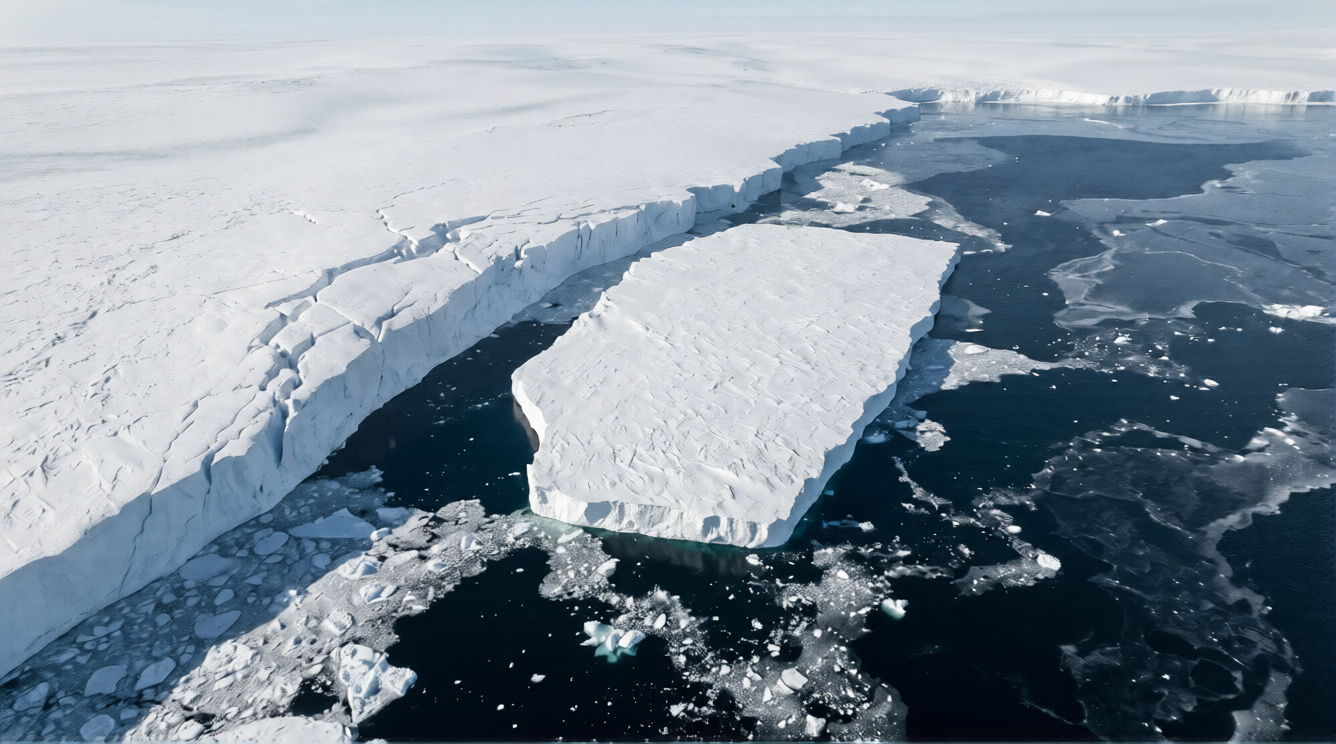
Polar researchers and satellite tracking networks have confirmed a major calving event in Antarctica, as a massive iceberg measuring approximately 380 square kilometers (146 square miles)—roughly the size of a major global metropolis—has officially broken free from the Brunt Ice Shelf. Designated as A-83 by the US National Ice Center, the colossal block of ice severed from the continent after a series of deep rifts and fractures rapidly accelerated over recent weeks.
The detachment, while expected by glaciologists who have been monitoring the shelf’s structural instability for years, represents one of the most significant natural rearrangements of the Antarctic coastline in recent years, prompting immediate maritime and environmental tracking.
The Severing of A-83: Years in the Making
The calving event occurred on the Brunt Ice Shelf, located in the Weddell Sea sector of Antarctica. This floating ice sheet, which can reach thicknesses of up to 150 meters, has been under intense scientific scrutiny due to the propagation of massive, natural fractures across its surface.
According to satellite observations from the European Space Agency's Sentinel-1 and NASA's Landsat missions, the break was precipitated by the rapid extension of a fracture known as the 'Chasm 1' rift. The final detachment occurred during a period of high ocean swell and shifting atmospheric pressures, which acted as natural levers to sever the massive ice mass from the main shelf.
Key observational data regarding the event includes:
- Precise Scale: Satellite measurements confirm the iceberg’s area at roughly 380 square kilometers, with an estimated thickness of over 100 meters, holding billions of tons of fresh water.
- Rift Acceleration: Glaciologists noted that the fracture line had been extending at a rate of several meters per day before the final, sudden break.
- No Immediate Impact on Human Research: The British Antarctic Survey's (BAS) Halley Research Station, which was famously relocated further inland in 2017 to avoid calving risks, remains safe and operational, with its monitoring instruments continuing to record the event in real time.
The Environmental and Oceanic Implications
The birth of A-83 is a natural process of the ice shelf's lifecycle, where the outward push of continental glaciers must inevitably be balanced by calving events. However, the frequency and scale of these breaks are being closely analyzed to understand the impact of warming ocean currents on the stability of Antarctica's protective ice barriers.
| Scientific Concern | Environmental Impact |
|---|---|
| Oceanic Circulation | As A-83 drifts and eventually melts in warmer waters, it will release vast quantities of cold, fresh water, potentially altering localized ocean currents and salinity levels. |
| Natural Barriers | The loss of massive ice shelf sections reduces the physical buttressing effect, which can allow inland glaciers to flow more rapidly into the sea, contributing to sea-level rise. |
| Maritime Safety | The giant iceberg will eventually fragment into smaller, hazardous chunks (growlers and bergy bits), requiring continuous satellite and radar tracking to protect southern shipping lanes. |
| Ecosystem Disruption | The movement of the massive ice block will alter the light levels and nutrient cycles of the surrounding marine environment, impacting local krill, seal, and penguin habitats. |
Tracking its Path: What Happens Next?
Satellite networks and oceanic monitors will continue to track A-83 as it begins its long, slow drift. Historical trajectories of icebergs from this region suggest that the giant block will likely be carried by the coastal current (the Antarctic Coastal Current) in a westerly direction through the Weddell Sea before drifting north into the South Atlantic, a path often referred to as "Iceberg Alley."
As the massive ice mass meets warmer waters and stronger ocean swells, it will begin to fragment, slowly melting over a period of months or even years. Scientists will continue to use radar, satellite imagery, and on-site sensors to monitor how this calving event affects the remaining Brunt Ice Shelf, capturing vital data on the changing dynamics of the world's most remote and critical environmental systems.
Related articles