COP31 Climate Summit Opens in Antalya: World Envoys Target Clean Energy Capital Gap and Loss-and-Damage Deals
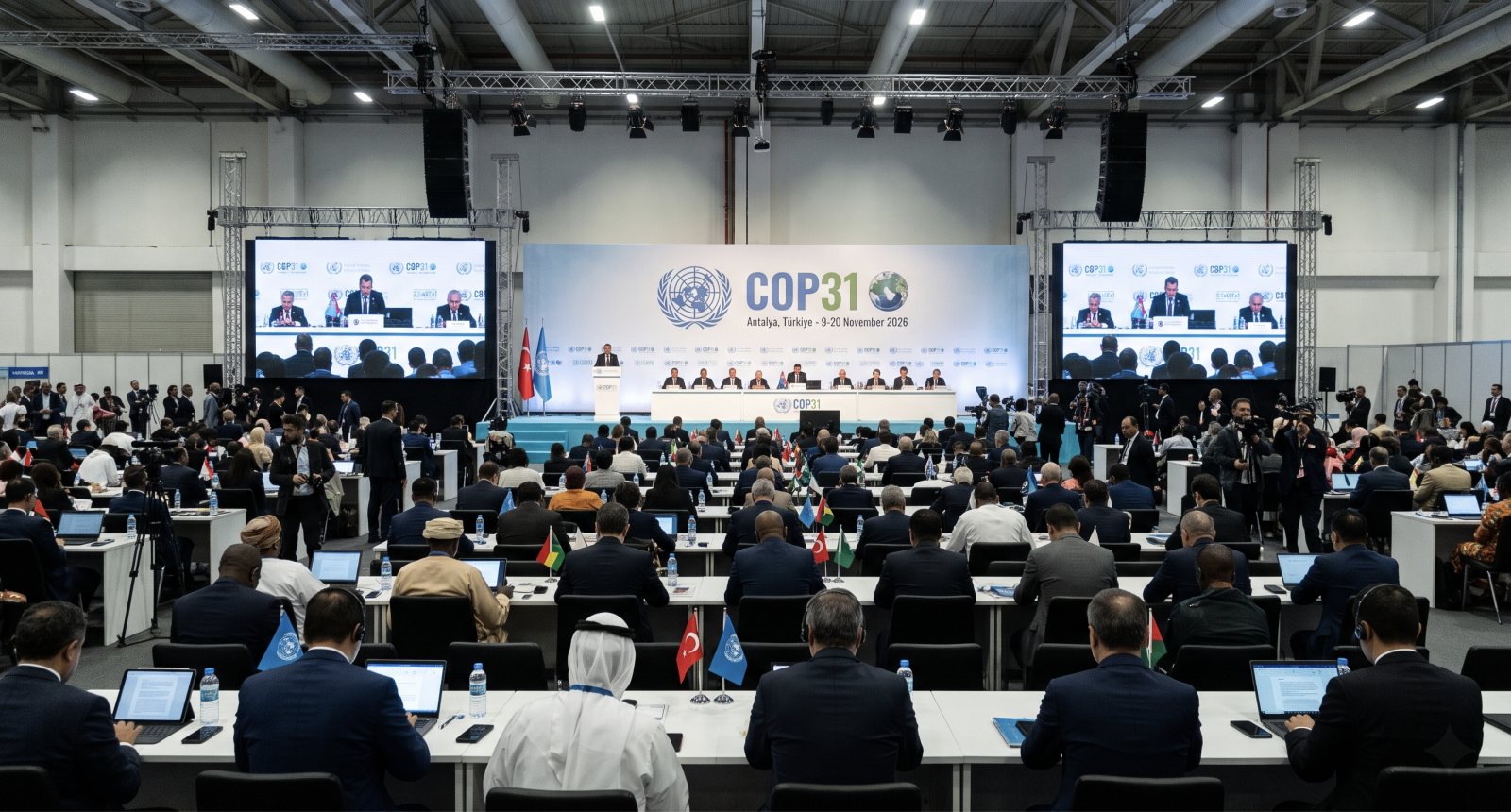
Representatives and climate envoys from more than 190 nations gathered in the coastal city of Antalya, Türkiye, as the 31st United Nations Climate Change Conference (COP31) officially commenced. Scheduled to run through November 20, 2026, the high-stakes diplomatic assembly is tasked with establishing concrete financial architectures to bridge the widening gap between advanced clean-energy technology and affordable capital access for vulnerable economies.
Following a year marked by historic climatic volatility and widespread heat anomalies across the globe, the multilateral negotiations mark a decisive turn toward implementation, shifting debate from theoretical emission targets to practical balance-sheet commitments.
The Central Agenda: From Technology to Affordability
Unlike earlier summits dominated primarily by the negotiation of baseline target agreements, COP31 enters its sessions with renewable energy hardware widely deployed across advanced markets. The proliferation of commercial solar infrastructure, grid-scale battery arrays, and electric mobility solutions has demonstrated technological viability; however, capital costs and interest rates remain a severe barrier across the Global South.
UN envoys and participating finance ministers have outlined three core negotiating pillars for the two-week summit:
- Concessional Clean Finance: Establishing multilateral guarantees that lower sovereign borrowing rates for developing nations deploying massive grid infrastructure.
- Loss and Damage Implementation: Finalizing expedited disbursement channels for the international fund created to support frontline communities recovering from severe natural disruptions.
- Grid and Storage Standardization: Facilitating cross-border power transmission agreements and raw-material processing partnerships for critical battery components.
The 1.5°C Horizon and Geopolitical Realities
The Antalya negotiations take place against a complex economic backdrop. High government debt burdens and regional trade tensions have tightened fiscal spending in several industrialized countries, making multilateral monetary commitments a point of sharp contention among delegations.
| Negotiation Topic | Key Debate in Antalya | Stated Objective |
|---|---|---|
| Renewable Capital Flow | Disproportionate clean-tech investment concentrated in the G20 | Directing private-public equity pools to emerging markets |
| Fossil Fuel Phase-Down | Energy grid security vs. accelerated decommissioning | Establishing binding timelines for coal and gas conversion |
| Critical Minerals Trade | Export tariffs and localized refining mandates | Ensuring stable supply chains for solar and battery production |
| Adaptation Targets | Underfunded coastal and agricultural defense systems | Doubling dedicated grants for resilient regional infrastructure |
Looking Ahead: The Antalya Declaration
As working groups draft preliminary working texts across thematic sessions, observers will monitor whether donor countries provide legally binding allocations to meet escalating adaptation requirements. The final declaration, expected at the close of proceedings next week, will serve as an essential indicator of whether international diplomacy can transform technological momentum into universally accessible solutions.
Related articles