
OpenAI's $11 Billion Funding Boost Highlights the Global AI Infrastructure Boom
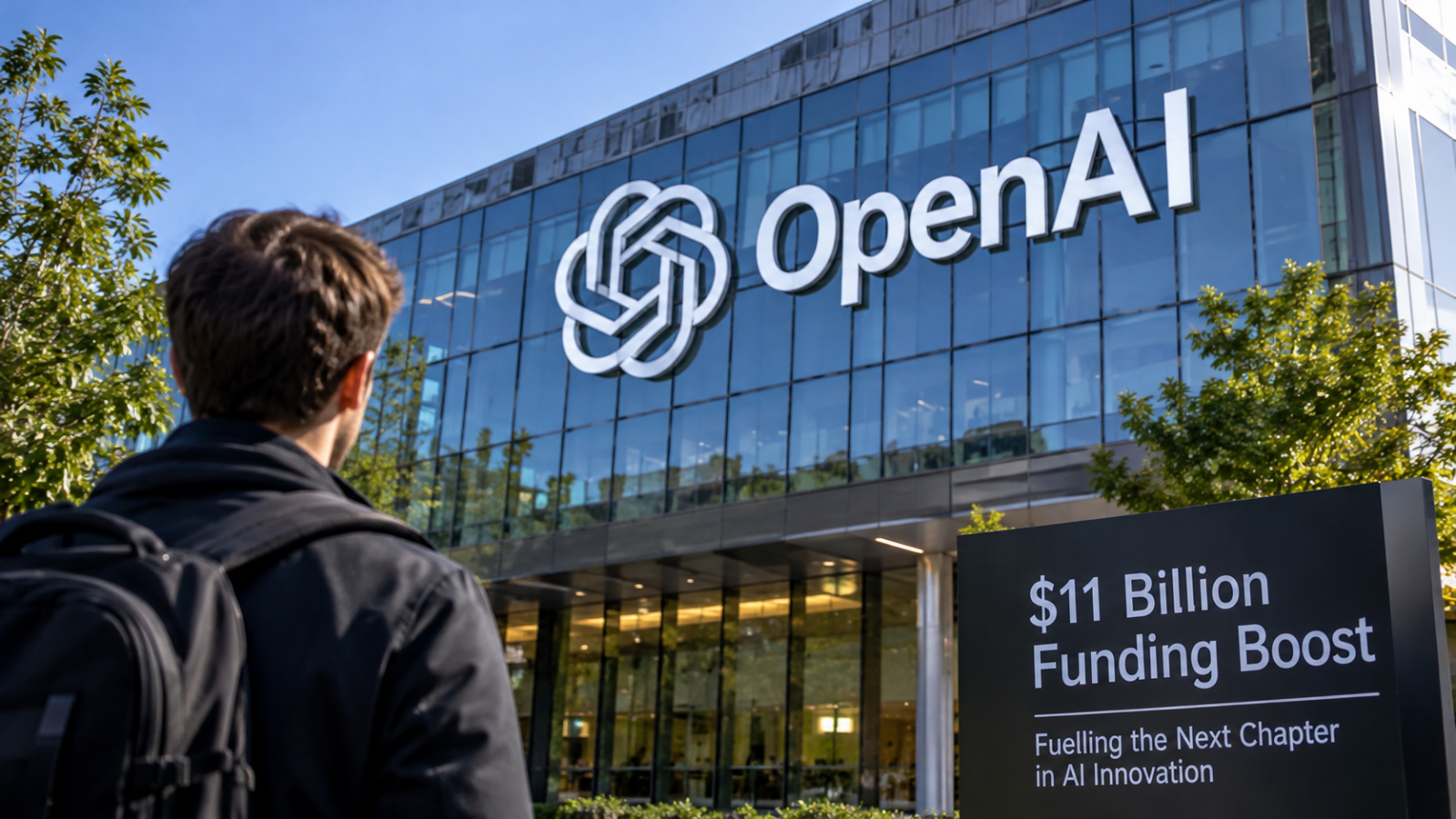
OpenAI's $11 Billion Funding Boost Highlights the Global AI Infrastructure Boom
OpenAI's latest reported funding milestone highlights the growing financial scale of the global artificial intelligence industry. On November 6, 2026, the company reportedly secured approximately $11 billion in the initial portion of a new funding round, placing its valuation at around $1.25 trillion. The remaining investment could increase the total size of the round to approximately $20 billion.
The development comes as major technology companies are increasing their investments in artificial intelligence, advanced computing hardware and large-scale data centers. As AI tools become increasingly important for businesses, developers and consumers, the demand for powerful computing infrastructure continues to grow.
OpenAI's latest fundraising activity also highlights an important change in the technology industry. Competition is no longer limited to developing advanced AI models. Companies must also secure processors, electricity, cloud computing capacity and the physical infrastructure required to operate these systems at scale.
OpenAI's $11 Billion Funding Explained
The reported $11 billion funding represents the initial portion of a larger financing round that values OpenAI at approximately $1.25 trillion. The total amount could reach around $20 billion as additional investments are completed.
The November funding development reportedly involves several major institutional and technology-focused investors. SoftBank Group and MGX are among the participants, while Coatue Management and T. Rowe Price have also been identified among investors in the initial funding close. Other investment groups associated with the wider round include Sequoia Capital, Founders Fund and Andreessen Horowitz.
The latest financing should be understood separately from OpenAI's earlier fundraising activities in 2026. In February, the company announced $110 billion in new investment at a $730 billion pre-money valuation. By March 31, the earlier financing round had reached $122 billion in committed capital, with an $852 billion post-money valuation.
The November funding is a subsequent financing development rather than an additional announcement of the same February investment. OpenAI's reported valuation also represents a private-company valuation, not the market capitalization of a publicly traded company.
OpenAI Funding Timeline
| Funding Development | Investment Amount | Reported Valuation | Period |
|---|---|---|---|
| Initial strategic funding announcement | $110 billion | $730 billion pre-money | February 2026 |
| Earlier funding round completion | $122 billion | $852 billion post-money | March 2026 |
| New funding round initial portion | $11 billion | $1.25 trillion | November 2026 |
Why OpenAI Needs Massive AI Infrastructure
Developing advanced artificial intelligence requires enormous computing resources. Modern AI models process large quantities of information, identify complex patterns and generate responses through sophisticated networks of processors and software systems.
These operations require specialized hardware, particularly graphics processing units (GPUs), which are designed to handle demanding parallel computing workloads.
There are two major areas of computing demand in the AI industry: model training and inference.
- AI Model Training: This involves processing enormous datasets to develop and improve artificial intelligence models. Training advanced systems requires powerful processors and large computing clusters.
- AI Inference: This is the computing process that takes place when users interact with AI applications. Every question, generated image, coding request or business task requires computing resources.
As more people and businesses use AI services, companies need additional computing capacity to maintain performance and reliability. This creates demand for data centers, advanced networking systems, high-speed memory and dependable electricity supplies.
For OpenAI, securing long-term access to these resources is an important part of expanding its products and supporting future AI development.
The Role of NVIDIA, Amazon and SoftBank
The global AI infrastructure ecosystem depends on cooperation between software developers, semiconductor manufacturers, cloud providers and investment companies. Several major organizations have become important participants in this expanding industry.
NVIDIA and Advanced AI Processors
NVIDIA is one of the most important companies in the AI semiconductor industry. Its GPUs and advanced computing platforms are widely used for training and operating large artificial intelligence models.
OpenAI announced an expanded partnership with NVIDIA in February 2026, including plans for dedicated inference and training computing capacity based on next-generation systems.
Access to advanced processors is important because AI models require significant computing power. A reliable supply of specialized hardware can help developers increase model capacity, improve performance and support more users.
Amazon and Cloud Computing
Amazon is another major participant in OpenAI's infrastructure strategy. The earlier February 2026 investment announcement included a $50 billion commitment from Amazon as part of the $110 billion strategic financing plan.
Amazon Web Services provides cloud computing services that businesses use to host applications, manage information and operate large digital systems.
Cloud infrastructure can help AI companies expand their services without depending entirely on privately owned data centers. It also allows businesses to access computing resources as their requirements change.
SoftBank and Long-Term Technology Investment
SoftBank Group has been involved in OpenAI's major financing activities and is also associated with the latest reported funding development.
The Japanese investment group has maintained a strong interest in artificial intelligence, robotics and advanced technology infrastructure. Its involvement reflects the growing interest of large institutional investors in the long-term commercial potential of AI.
The Global AI Infrastructure Investment Boom
OpenAI's fundraising activity is part of a much larger transformation across the global technology industry. Major companies, including Microsoft, Google, Amazon and Meta, are investing heavily in computing infrastructure to support their artificial intelligence strategies.
These investments are creating demand across several connected industries.
- Semiconductor Manufacturing: AI processors, advanced memory and specialized chip technologies are becoming increasingly important.
- Data Center Construction: Companies are developing larger facilities to accommodate powerful computing systems and expanding digital workloads.
- Cloud Computing: Businesses are adopting cloud-based infrastructure to access advanced computing services.
- Energy Production: Data centers require reliable electricity supplies, creating additional demand for power generation and grid development.
- Cooling Technology: High-performance computing equipment produces substantial heat, increasing the importance of advanced cooling systems.
This expansion is also creating new challenges. Data center construction requires suitable locations, access to electricity, specialized equipment and significant financial resources. In some regions, power availability and grid connections can become major obstacles to new projects.
How AI Infrastructure Investment Could Shape the Future
Growing investment in AI computing infrastructure could influence the development of artificial intelligence across several industries. Greater computing capacity may help companies develop more capable models and make advanced AI applications available to a wider audience.
AI-Powered Business Automation
Businesses are increasingly exploring artificial intelligence for customer support, software development, document processing, data analysis and administrative operations.
More computing resources could support advanced AI agents capable of handling multiple steps in a business workflow. However, their practical value will depend on reliability, security and the ability to perform tasks accurately.
Scientific Research and Innovation
Artificial intelligence is being used in scientific research, including drug discovery, materials science, biological analysis and climate research.
Advanced computing systems can help researchers process complex datasets and conduct computational experiments. These applications could contribute to new discoveries across scientific disciplines.
More Advanced AI Assistants
AI assistants are evolving beyond basic text conversations. Modern systems increasingly support image generation, voice interactions, coding assistance and software-based tasks.
As computing infrastructure expands, developers may be able to introduce more sophisticated services and improve the speed and availability of existing AI applications.
Challenges Behind Massive AI Investments
Despite the growing financial interest in artificial intelligence, building large-scale computing infrastructure involves substantial technical, environmental and economic challenges.
Rising Electricity Consumption
Large data centers require significant amounts of electricity to operate processors, networking equipment and cooling systems. Expanding these facilities can place additional pressure on local power infrastructure.
Semiconductor Supply Chain Limitations
Advanced AI processors depend on complex manufacturing processes, specialized packaging technologies and carefully managed supply chains. Production delays or shortages can affect the expansion plans of major technology companies.
High Infrastructure Costs
Building AI data centers requires spending on land, construction, servers, electrical systems, networking equipment and cooling technology. Companies must also manage ongoing maintenance and operating expenses.
Long-Term Financial Returns
Large investments do not automatically guarantee profitable results. AI companies must develop products and services that generate enough revenue to cover computing, research, infrastructure and operational expenses.
Investors will continue examining customer demand, business growth and the financial sustainability of large AI infrastructure projects.
What OpenAI's Funding Means for the Global Technology Industry
The reported $11 billion funding development demonstrates the scale of financial resources flowing into artificial intelligence. It also highlights the growing importance of strategic relationships between AI developers, semiconductor manufacturers, cloud providers and institutional investors.
For businesses, expanding AI infrastructure could create opportunities to adopt more advanced digital tools. For technology developers, improved access to computing resources could support new products and applications.
However, the future of the industry will not depend on investment alone. Companies must also demonstrate that their AI systems provide genuine value, operate reliably and generate sustainable economic returns.
Conclusion
OpenAI's reported $11 billion initial funding close at a $1.25 trillion valuation represents another major development in the global artificial intelligence investment landscape.
When considered alongside its earlier $122 billion funding round, the latest financing highlights the enormous capital requirements involved in developing and operating advanced AI systems.
Partnerships involving NVIDIA, Amazon and SoftBank also demonstrate that the future of artificial intelligence depends on cooperation across software development, semiconductor manufacturing, cloud computing and physical infrastructure.
As competition in the AI industry continues, access to computing power, reliable electricity and sustainable financing will remain important factors in determining how quickly artificial intelligence technology develops and reaches businesses and consumers around the world.
Related articles