
The Strait of Hormuz Standoff: How Escalating Maritime Friction and the US Midterm Pivot Are Upending Global Energy Flows
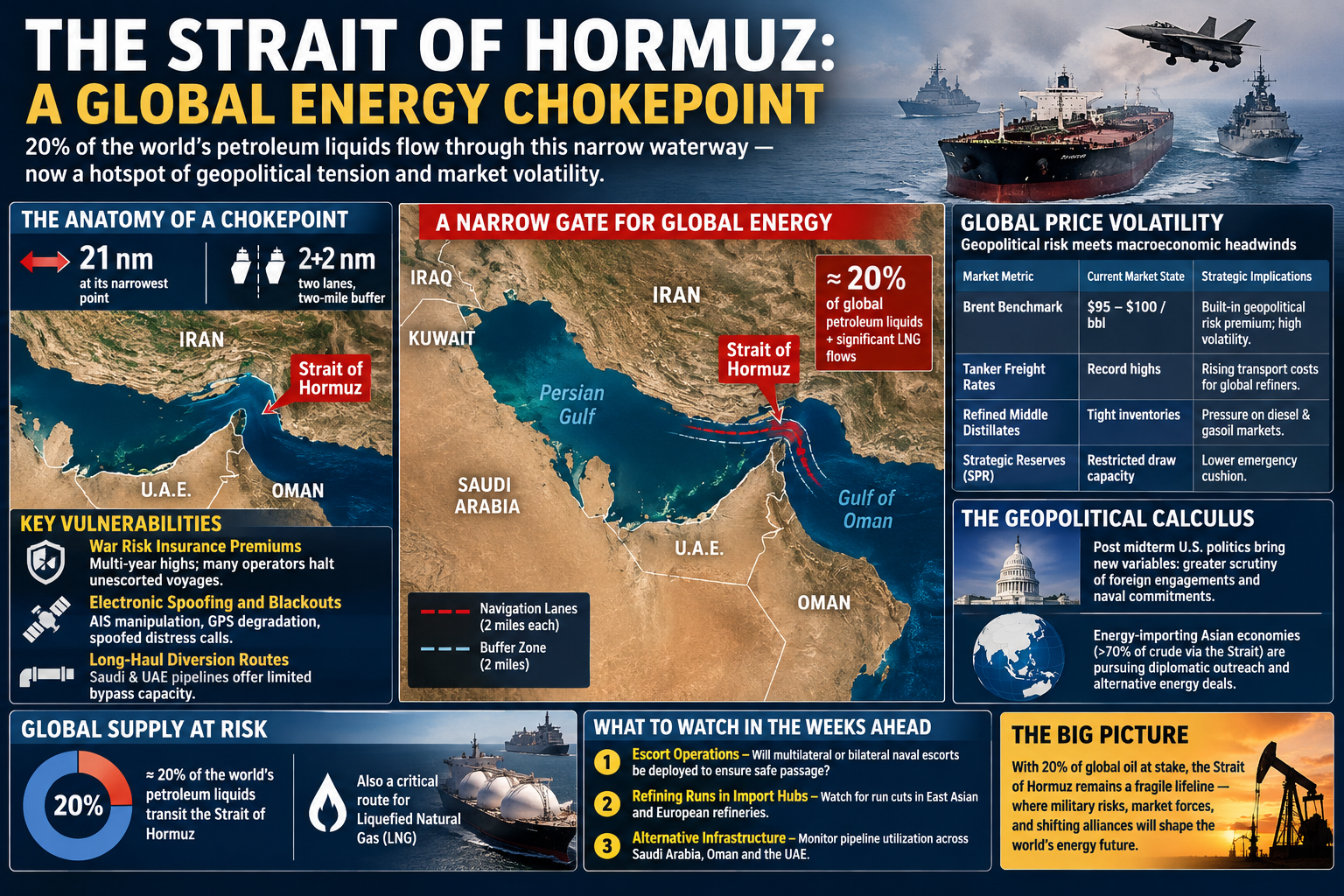
As direct military confrontations between regional powers intensify, the strategic focus of global commodity markets has locked onto a single, precarious maritime chokepoint: the Strait of Hormuz. Handling roughly 20% of the world's total petroleum liquids and significant liquefied natural gas (LNG) flows, the waterway is experiencing unprecedented structural friction. Heightened air defense alerts, military exclusion zones, and reciprocal naval interdictions have transformed standard merchant shipping into an ultra-high-risk operational theater.
The geopolitical impasse coincides with shifting political dynamics in Washington following the U.S. midterm elections, forcing multinational trading houses and refiners to rapidly re-evaluate maritime logistics, insurance premiums, and strategic sovereign fuel reserves.
The Anatomy of a Chokepoint: Vulnerabilities of the Waterway
At its narrowest geographic stretch, the Strait of Hormuz spans just 21 nautical miles, with commercial inbound and outbound transit restricted to two-mile-wide navigation lanes separated by a two-mile buffer. This acute spatial concentration leaves supertankers uniquely exposed to coastal anti-ship cruise missiles, loitering munition drones, and rapid-patrol naval mining operations.
Recent operational intelligence across the maritime corridor reveals three critical supply disruptions:
- War Risk Insurance Premiums: Marine underwriters have elevated additional war risk premiums (AWRP) to multi-year highs. For a standard Very Large Crude Carrier (VLCC) moving through Gulf waters, insurance add-ons now represent a substantial percentage of total charter costs, prompting multiple private shipping conglomerates to halt unescorted voyages.
- Electronic Spoofing and Blackouts: Commercial vessels traversing the Gulf of Oman and the Strait report widespread automatic identification system (AIS) manipulation, GPS coordinate degradation, and spoofed distress calls, compelling captains to rely on manual radar and strict visual navigation.
- Long-Haul Diversion Routes: While Saudi Arabia’s East-West crude pipeline and the UAE's Habshan-Fujairah pipeline offer limited overland circumvention to the Red Sea and Arabian Sea, their combined throughput cannot absorb the massive volume of heavy sour crude and refined products normally loaded directly from terminal ports inside the Gulf.
Global Price Volatility: Crude Spikes vs. Macro Headwinds
Energy markets are caught between opposing market forces: physical supply interdiction fears on one side, and broader macroeconomic demand slowdowns on the other.
| Market Metric | Current Market State | Strategic Implications |
|---|---|---|
| Brent Benchmark | Elevated trading near $95 – $100/barrel | Reflects a built-in geopolitical risk premium; high volatility driven by daily military developments. |
| Tanker Freight Rates | Record high daily time-charter equivalents | Escalating transport overhead increases landed import costs for refiners across Asia and Europe. |
| Refined Middle Distillates | Tightening global diesel and gasoil inventories | Heavy manufacturing and transport sectors face margin compressions ahead of winter peak demand. |
| Strategic Reserves (SPR) | Restricted draw capacity | Sovereign emergency cushions remain lower than historic averages, constraining emergency release leverage. |
Geopolitical Realignment: The Diplomatic Calculus
The evolving balance of power inside the U.S. Congress has introduced new variables into regional diplomacy. With lawmakers demanding increased oversight on foreign military engagements and questioning prolonged defensive naval commitments, regional players are adjusting their strategic positions.
Energy-importing Asian economies—which absorb more than 70% of the crude exiting the Strait—have ramped up direct diplomatic channels with both regional capitals, seeking maritime safety corridors and alternative bilateral energy agreements. Meanwhile, major state-backed producers outside the immediate friction zone are operating near maximum extraction limits, leaving thin spare capacity to counter any widespread prolonged physical halt in the Arabian Gulf.
What to Watch in the Weeks Ahead
- Escort Operations: Whether multilateral naval coalitions or bilateral state escorts will be permanently deployed to guide merchant convoys through high-threat coastal corridors.
- Refining Runs in Import Hubs: Watch for operational run cuts across East Asian and European refinery hubs as higher crude delivery costs and maritime transit delays compress crack spreads.
- Alternative Infrastructure Utilization: Monitor pipeline utilization across overland bypass systems in Oman, Saudi Arabia, and the United Arab Emirates to evaluate real physical containment capacity.
Related articles