
Tesla to Wind Down Cybertruck Production at Texas Gigafactory to Make Room for Autonomous Cybercab
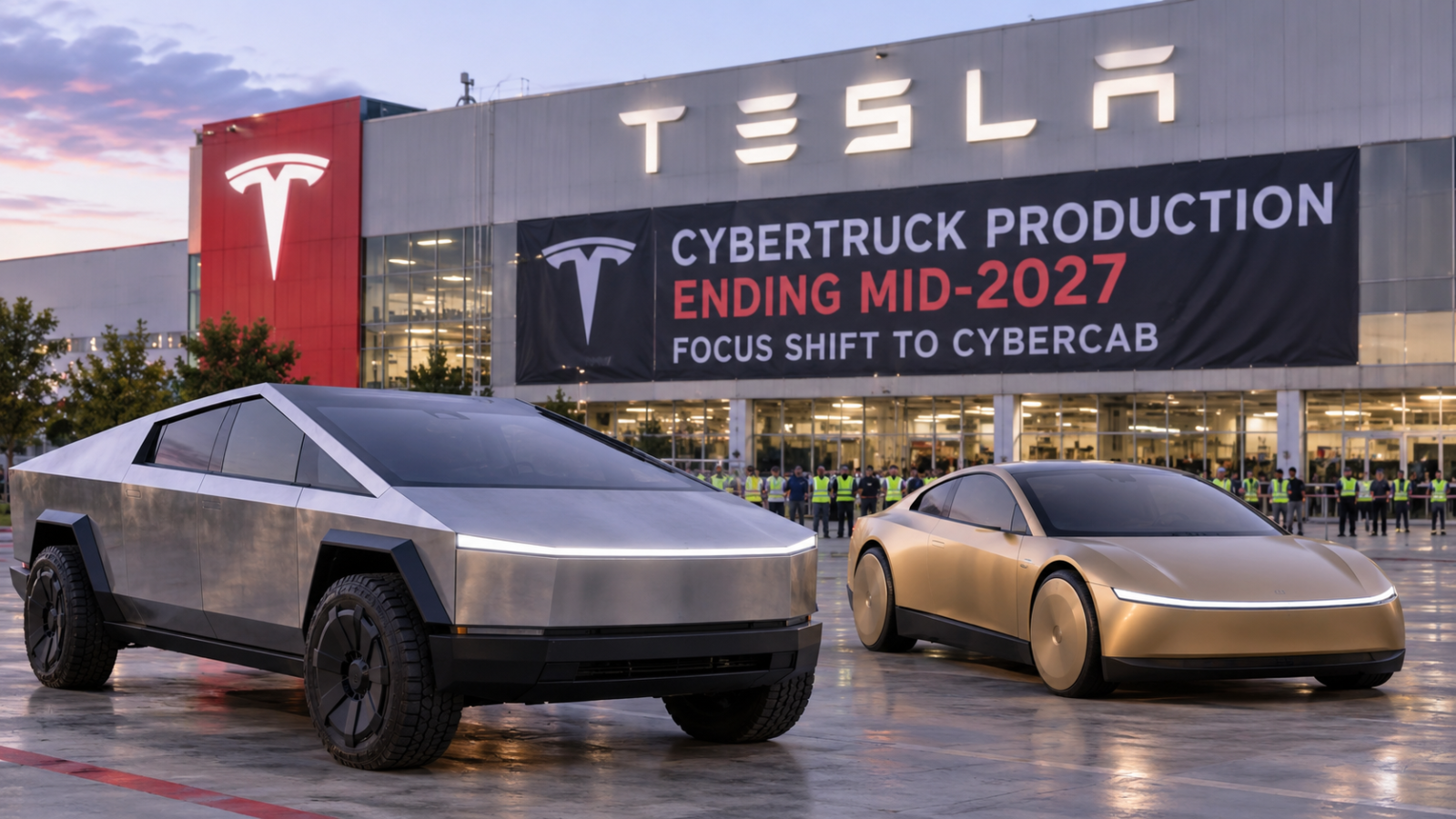
In a major strategic pivot for the global electric vehicle sector, Tesla has confirmed plans to wind down Cybertruck assembly at its flagship Gigafactory in Austin, Texas, by mid-2027. The operational transition is designed to reallocate assembly lines, heavy machinery, and floor capacity toward high-volume production of the fully autonomous, steering-wheel-free Cybercab.
The decision marks a critical turning point for the angular, stainless-steel electric pickup that dominated automotive headlines upon its commercial rollout in late 2023. While publicly termed the "end of an era" for the Texas facility, the restructuring signals Tesla’s accelerated pivot toward autonomous mobility networks and dedicated robotaxi fleets.
Production Reallocation: Moving Beyond the Stainless-Steel Platform
The manufacturing wind-down follows several quarters of calibrated output adjustments and market reassessments. Despite generating significant social media visibility, the pickup encountered substantial manufacturing bottlenecks, repeated technical recalls, and sustained demand resistance outside select domestic segments.
Key operational headwinds that influenced the production transition include:
- Sales Trajectory: Initial internal projections envisioned annual deliveries reaching roughly 250,000 units. However, domestic deliveries settled closer to 20,000 to 40,000 units annually across recent production cycles, reflecting broader cooling across premium full-size electric truck markets.
- International Regulatory Barriers: The vehicle's rigid exoskeleton and sharp structural contours limited certification pathways in major European and Asian markets that enforce strict pedestrian-impact safety standards.
- Servicing and Recall Cycles: Regulatory bodies recorded multiple safety recalls and hardware revisions over the platform's multi-year deployment, requiring recurring software patches and assembly-line tooling updates.
The Cybercab Mandate: Prioritizing Autonomous Scale
The manufacturing floor space vacated by Cybertruck lines in Texas will be converted into high-density manufacturing pods for the Cybercab. Designed without physical steering wheels, pedals, or conventional side mirrors, the compact two-passenger autonomous vehicle represents the core hardware engine of Tesla's long-term commercial platform.
Tesla has already initiated localized driverless commercial testing in select municipal zones, deploying hundreds of purpose-built robotaxi prototypes alongside modified consumer crossovers. Converting dedicated factory footprint in Austin allows the company to pursue lower unit costs, streamlined unboxed assembly sequences, and automated quality control pipelines.
Market and Investor Reactions
Automotive analysts and industrial observers view the manufacturing pivot as a rational corporate consolidation. Reallocating capital away from niche utility vehicles allows corporate resources to focus directly on scalable fleet operations and proprietary autonomy software models.
While management has not ruled out contract manufacturing or specialized low-volume production elsewhere in the future, the phased wind-down at Gigafactory Texas confirms that autonomous transit infrastructure now sits at the top of the company's enterprise roadmap.
Key Industry Implications
- Fleet Transition Timeline: Factory retooling will proceed in phases through the middle of 2027 to prevent operational disruption across active Model Y assembly bays.
- Regulatory Scrutiny: Mass deployment of dedicated driverless vehicles without human control overrides continues to face federal vehicle safety evaluation and regional licensing reviews.
- Secondary Market Demand: Analysts anticipate that early-production stainless-steel pickups may transition into collectible collector assets as output numbers cap out over the next production cycles.
Related articles