What Is the Yerevan Pathway Inside the UN's Quiet $2 Billion Deal to Save Nature by 2030
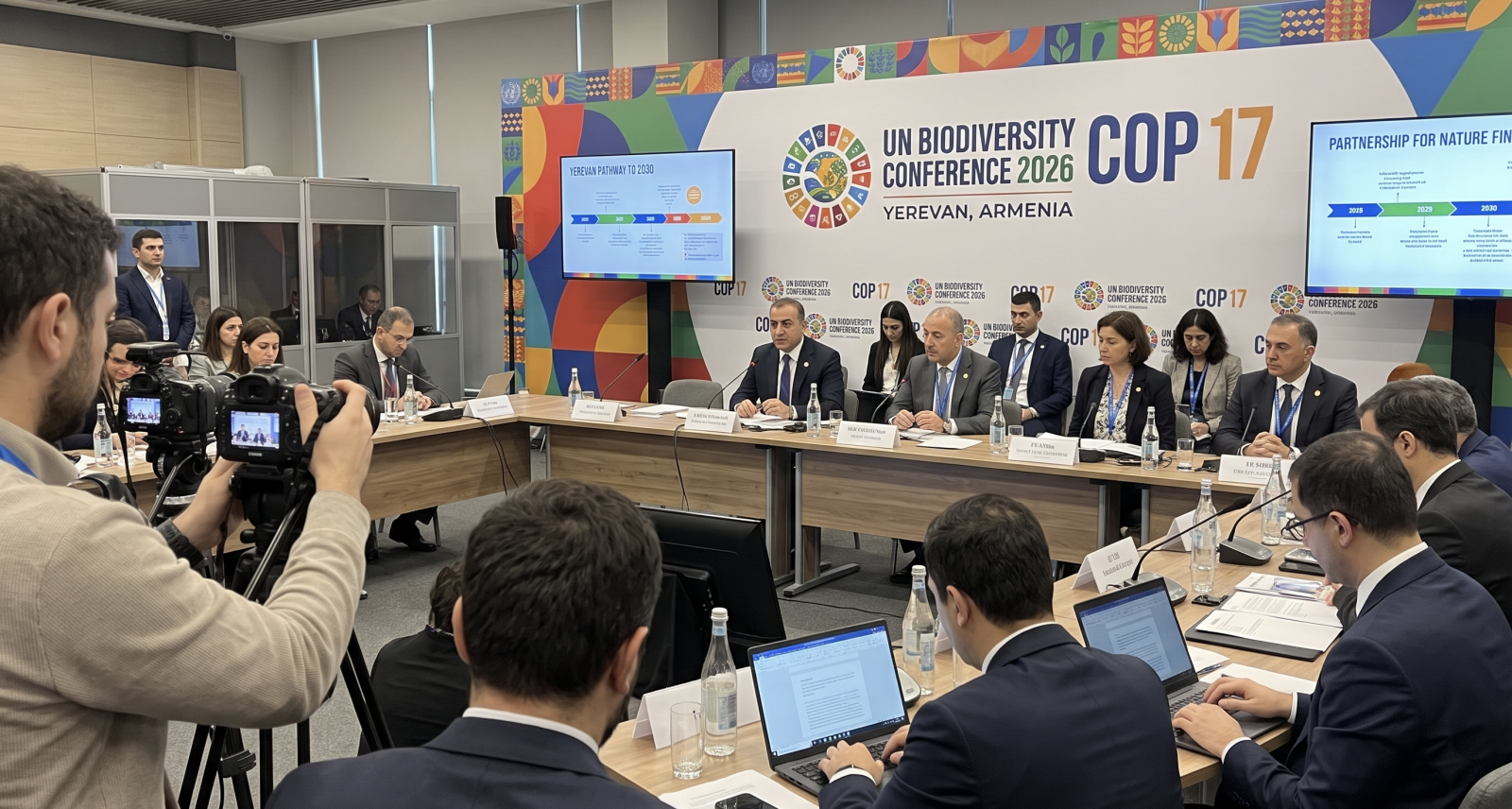
While global headlines over the past two weeks were dominated by elections, trade disputes, and regional conflicts, negotiators from nearly 200 countries quietly closed a major environmental summit in Armenia with a new plan to rescue the planet's wildlife and ecosystems. Called the Yerevan Pathway, the agreement unlocks nearly $2 billion in fresh nature funding and gives Indigenous communities a permanent seat at the table, though countries still fell short on cutting harmful government subsidies.
Last updated: 12 November 2026. Implementation plans, national biodiversity strategies, and donor funding pledges are still unfolding.
Key Takeaways
- The 17th UN Biodiversity Conference (COP17) concluded in Yerevan, Armenia, with the formal adoption of the Yerevan Pathway.
- A comprehensive global review at the summit confirmed that the world is currently off track to meet its 2030 nature targets.
- Countries, philanthropic groups, and development banks announced nearly $2 billion in new biodiversity funding, including $560 million through the Global Environment Facility.
- Delegates approved the Sevan Guidelines, creating formal operating rules for a permanent UN body led by Indigenous Peoples and local communities.
- Major disagreements over phasing out environmentally harmful subsidies and creating a dedicated new nature fund were softened or delayed until 2028.
Why This Quiet Summit Matters
Every two years, governments gather under the UN Convention on Biological Diversity (CBD) to track how fast the world is losing forests, oceans, wetlands, and wild species. Unlike UN climate summits, which draw massive media attention, corporate delegations, and street protests, biodiversity talks rarely trend on social media—even though collapsing ecosystems directly threaten global food supplies, clean water, medicine, and economic stability.
At the Yerevan meeting, held from 19 to 30 October 2026, delegates reviewed global progress at the critical halfway mark toward the 2030 deadline of the Kunming-Montreal Global Biodiversity Framework. Signed in 2022, that landmark pact committed nations to protecting 30% of the world's land and oceans by the end of the decade. The verdict in Armenia was blunt: existing national plans and funding flows are not moving nearly fast enough to halt nature loss over the next four years.
What Was Agreed in Yerevan
Despite tense late-night negotiations, delegates managed to pass a broad package of measures designed to turn high-level promises into measurable domestic action.
| Outcome | What It Does |
|---|---|
| The Yerevan Pathway | Sets a four-year action roadmap urging nations to align national budgets with conservation goals, submit updated biodiversity plans, and tighten progress tracking. |
| $2 Billion Funding Boost | Combines $560 million via the Global Environment Facility, $500 million for the Species Recovery Alliance, and $330 million for the Value Nature Fund, alongside smaller bilateral pledges. |
| Sevan Guidelines | Establishes how Indigenous Peoples and local communities will participate permanently in global biodiversity policy decisions and resource allocation. |
| 50 Technical Decisions | Updates international rules on invasive alien species, deep-sea marine protection, synthetic biology, digital sequence information, and sustainable forest governance. |
Why Indigenous Representation Is a Turning Point
One of the most widely praised achievements in Yerevan was the approval of the Sevan Guidelines. Scientific studies consistently show that lands managed by Indigenous Peoples and local communities suffer far lower rates of deforestation and species decline than state-run parks or commercial zones. Until recently, however, these groups often acted only as outside observers at UN summits.
By finalizing the operating rules for a permanent subsidiary body under the UN biodiversity treaty, the Sevan Guidelines ensure that Indigenous leaders can directly shape policy recommendations, review national conservation targets, and influence how international conservation grants are spent on the ground.
Where Countries Clashed and Stalled
Behind the diplomatic handshakes, deep divisions between wealthy economies and developing nations prevented negotiators from resolving the toughest financial issues.
Harmful subsidies. Governments spend hundreds of billions of dollars each year on agricultural, fishing, mining, and fossil-fuel subsidies that inadvertently encourage deforestation, soil degradation, and overfishing. Under the 2022 Kunming-Montreal deal, nations had pledged to identify and reduce these payouts by at least $500 billion a year by 2030. Environmental groups wanted strict language in Yerevan requiring countries to report concrete cuts. However, several nations—including India, Russia, and Saudi Arabia—pushed back against mandatory phrasing, warning that sudden cuts could hurt rural farmers and food security. The final agreement was softened to merely "encourage" countries to reform subsidies based on their national circumstances.
The money gap. Developing countries, which hold most of the world's richest tropical forests, coral reefs, and wildlife habitats, argued that wealthy nations are still not providing enough predictable grants. According to UN estimates, closing the global biodiversity finance gap requires roughly $700 billion a year—meaning the $2 billion announced in Yerevan, while welcome, is only a small fraction of what is needed. India, which holds nearly 8% of the world's known plant and animal species on just 2.4% of the planet's land area, highlighted the high domestic cost of conservation and pressed for reliable technology transfer and public finance.
Delayed decisions. Negotiators could not agree on creating a brand-new standalone global biodiversity fund—a key demand of developing nations frustrated by complex application rules at existing institutions—or on expanding the list of official donor nations to include wealthier emerging economies. Both battles were postponed until COP18 in Ecuador in 2028.
What to Watch Next
- Corporate nature reporting: Financial standard-setters opened a 120-day public consultation—running until February 2027—on how companies and banks must disclose their reliance and impact on nature to investors.
- Nature bonds and credits: Development banks, including the Asian Development Bank, are rolling out new nature-linked bonds and debt-for-nature swaps to attract private institutional capital into conservation.
- National budget shifts: Whether finance ministries actually redirect domestic spending toward conservation and ecological restoration before the next major global review in Ecuador in 2028.
- Genetic data sharing: How quickly pharmaceutical, cosmetic, and agricultural companies begin paying into the global Cali Fund when they profit from digitized genetic data sourced from wild plants and microbes.
The Factora Take
Big environmental deals often fail not because of bad science, but because of awkward budgets. Signing a pledge to save forests or protect coastal waters is easy; cutting a popular farming, fertilizer, or fuel subsidy at home is politically painful. The Yerevan Pathway keeps global cooperation alive and brings meaningful money and Indigenous voices into the room, yet the hardest financial choices were pushed down the road to 2028. Real progress over the next four years will depend less on UN declarations and more on what finance ministries put into their next national budgets—and whether private companies are held accountable for the ecosystems they depend on.
Frequently Asked Questions
What is the Yerevan Pathway?
It is the main political roadmap adopted at the 17th UN Biodiversity Conference (COP17) in Yerevan, Armenia, outlining how countries should speed up conservation work, align national budgets, and close funding gaps to meet global 2030 nature targets.
Why was this summit less covered in the news?
Biodiversity conferences typically receive far less mainstream media attention than climate summits, elections, or geopolitical crises, even though their decisions shape global agriculture, forestry, supply chains, and corporate environmental rules.
What are the Sevan Guidelines?
Named after Armenia's Lake Sevan, these are the official operating rules for a new permanent UN body that gives Indigenous Peoples and local communities a formal, ongoing role in shaping global nature policies.
How much money was pledged at COP17?
Roughly $2 billion in new funding commitments and investment facilities were announced across public funds and development banks, though developing nations say far more predictable finance is still needed to meet the 2030 goals.
What is the "30 by 30" target mentioned in biodiversity talks?
It is the centerpiece goal of the Kunming-Montreal Global Biodiversity Framework, under which nearly 200 countries agreed to place at least 30% of the planet's land and marine areas under effective conservation and management by 2030.
Related articles