
AI Data Centers and Your Electric Bill: Why Power Costs Are Rising and What You Can Do
Last updated: 10 November 2026. Electricity prices vary widely by state, utility and season, and researchers disagree about how much of the increase is due to data centers. Figures below come from grid operators, government agencies, researchers and surveys, and estimates differ between them.
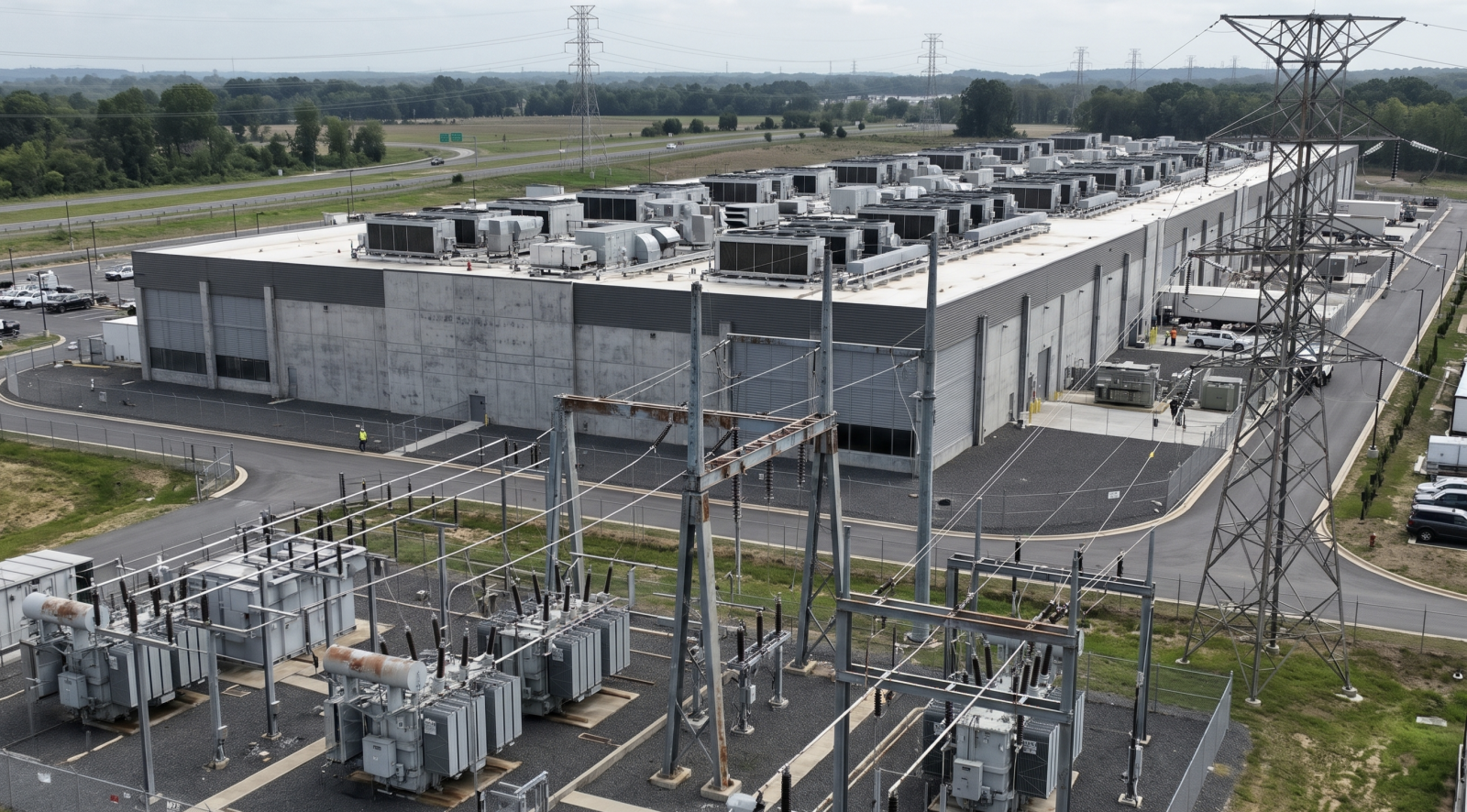
Artificial intelligence feels like something that lives on your phone or laptop, but behind every chatbot answer and AI image is a warehouse full of power-hungry computers. As tech companies race to build those warehouses, a question has moved from policy circles to kitchen tables: who pays for the extra electricity? In parts of the country, the answer increasingly looks like ordinary households, even those who live nowhere near a data center.
Key Takeaways
- Data centers used about 4.4 percent of US electricity in 2023, and federal laboratory projections suggest the share could reach roughly 7 to 12 percent by 2028.
- In the PJM grid region, which covers 13 states and Washington, D.C., the price paid for reserve power capacity rose from about $29 per megawatt-day in 2024/25 to more than $300 in recent auctions, and the grid's market monitor attributes a large share of the increase to data centers.
- One estimate puts the added cost to PJM's roughly 67 million customers at about $29 billion over two years. In Maryland, households were estimated to pay an extra $168 to $216 a year.
- The effect is not the same everywhere, and some industry-backed analysis finds no clear evidence that data centers are the main national driver of residential rate increases.
- States are responding with new rules that make large data centers pay more of their own costs.
Why a Data Center Can Affect Your Bill
Your electricity bill pays for more than the power you use. It also covers the cost of power plants, high-voltage lines and local equipment that keep the grid reliable. When a very large new customer arrives, utilities and grid operators must make sure there is enough supply to keep the lights on during peak demand. That can mean buying more capacity, building new lines and substations, or keeping older plants running. Under many current rules, those costs can be shared across all customers rather than assigned only to the big user that caused them.
The problem is one of scale. Utilities have sharply raised their forecasts of future peak demand, with one recent summary noting that roughly 90 gigawatts of a much larger projected increase is tied to data centers. Researchers at the Federal Reserve Bank of Dallas estimate that existing data centers have already raised wholesale electricity prices by about 2 to 6 percent on average nationwide, though the impact differs by region.
The PJM Region: The Clearest Example
PJM manages the grid for a huge area stretching from the mid-Atlantic to parts of the Midwest, including Northern Virginia, the world's largest concentration of data centers. It runs auctions to secure enough generating capacity years ahead. Prices from those auctions rose from about $29 per megawatt-day for the 2024/25 delivery year to more than $300 in recent rounds, reaching the auction price cap. The grid's independent market monitor has estimated that data centers added about $29 billion in costs to PJM customers over roughly two years. A separate analysis found that data centers were responsible for a large share of one earlier auction's price increase.
| Indicator | What the data shows |
|---|---|
| PJM capacity price | About $29 per MW-day (2024/25) to roughly $325 to $333 in recent auctions |
| Estimated extra cost to PJM customers | About $29 billion over roughly two years (market monitor estimate) |
| Maryland household estimate | About $168 to $216 more per year |
| US residential electricity price | Reported at about 17.4 cents per kilowatt-hour in early 2026, up more than 35 percent since 2020 |
| Utility rate increase requests, first half of 2026 | About $18.6 billion in electric and gas requests across the US |
Public opinion reflects the pain. A Consumer Reports survey of more than 2,000 adults in October found that 81 percent of people who had stayed in the same home for at least three years had seen their electricity bills rise, and 84 percent supported a separate rate category for large users such as data centers.
The Other Side of the Debate
It would be a mistake to blame data centers for every increase. Bills are also rising because of higher natural gas costs, aging infrastructure, storm recovery, and the cost of upgrading grids. Natural gas plants produced about 44 percent of PJM's electricity in 2024, so fuel prices matter a lot, and the energy shock from the Iran conflict has pushed fuel costs up, as we explained in our guide on why oil and fuel prices stay high. An analysis commissioned by the Data Center Coalition, an industry group, found no clear evidence that data centers are the main national driver of higher residential rates.
There is also evidence that the impact depends on local conditions. In states that already had spare generating capacity, new demand can spread fixed grid costs across more customers and even ease prices. North Dakota, for example, saw electricity demand rise by nearly 40 percent while inflation-adjusted prices fell. The practical takeaway is that the same boom can raise bills in one region and have little effect in another, which is why state rules matter.
How States Are Responding
- New Jersey passed a law in June 2026 requiring large data centers to pay for the infrastructure they need rather than passing those costs on to residents.
- Oregon regulators approved new rates for Portland General Electric in July 2026 that raised data center rates by an average of about 29 percent while slightly lowering residential and commercial rates.
- Texas regulators are finishing a cost-allocation rule for large loads, with the process due by December 2026, as requests from data centers to connect to the grid have surged.
What You Can Do
- Read your bill carefully. Look at the supply charge, the delivery charge and any new riders or fees, and compare your usage to the same month last year.
- Ask about rate plans. Some utilities offer time-of-use or off-peak pricing that rewards shifting laundry, dishwashing or electric vehicle charging to cheaper hours. In deregulated states, compare suppliers carefully and read the contract terms.
- Cut the biggest loads first. Heating and cooling usually dominate. A programmable thermostat, sealing air leaks and adding insulation can reduce use. A home energy audit, sometimes subsidised by utilities, can show where to start.
- Look for assistance. Programs such as the federal Low Income Home Energy Assistance Program and utility payment plans may help households struggling with high bills.
- Pay attention to local proceedings. Public utility commissions hold hearings on rate cases and data center rules, and public comments can influence outcomes.
Note that your own use of AI tools has only a tiny direct effect on your meter. The impact comes through the shared grid and the rate rules, not through your personal chatbot use.
What to Watch Next
- The next PJM auction results and any changes to price caps or rules for large customers.
- State and federal action on who pays for new grid infrastructure, including proposals in the new Congress.
- Tech spending. Analysts estimate that the five biggest US tech companies will spend roughly $700 billion or more on capital projects in 2026, much of it on AI infrastructure, so demand pressure is unlikely to vanish soon. We looked at the broader story in how AI is changing everyday life in America.
- New power supply, including gas, nuclear and renewable projects and on-site generation by data center operators.
The Factora Take
AI's physical footprint is now a household-budget issue. The fairest way to read the evidence is that data centers can raise costs significantly in places where supply is tight and rules spread expenses across all customers, while other regions see little effect. The central question is not whether to build the infrastructure but who bears the cost, and that is a policy choice that states and regulators are only beginning to settle. Readers who follow their local utility proceedings will be better placed to protect their budgets than those who wait for national answers.
Frequently Asked Questions
Do AI data centers raise my electric bill?
In some regions, especially the PJM grid area, evidence suggests they have contributed to higher costs, but the effect varies by utility, state and rules, and researchers disagree on its size nationally.
How much electricity do data centers use?
About 4.4 percent of US electricity in 2023, with projections of roughly 7 to 12 percent by 2028.
What is PJM?
PJM Interconnection is the grid operator for 13 states and Washington, D.C., including Northern Virginia, which has the world's largest cluster of data centers.
Are states doing anything about it?
Yes. New Jersey requires large data centers to pay for needed infrastructure, Oregon set higher rates for data centers, and Texas is writing new cost-allocation rules.
Does using ChatGPT or other AI tools raise my own bill?
Not directly. The effect on bills comes from the infrastructure costs spread across the grid, not from your individual use.
Related articles